Florence delivered the best food of the entire Italy trip, a Duomo dome climb, Michelangelo's David, a pasta making class, & a Chianti vineyard — all in three days.
Florence is where the Renaissance lives — and with the right audio guide in your ears, it comes alive in a way that art history class never quite managed. The food here was the best of the entire Italy trip, every meal was affordable, and the city is one of the easiest in Europe from which to take day adventures into Tuscany and beyond. This post covers three full days: the Duomo dome climb, the Uffizi, the Accademia, Bardini Gardens, a pasta making class, and a Chianti wine tour — plus every practical detail for doing it well.
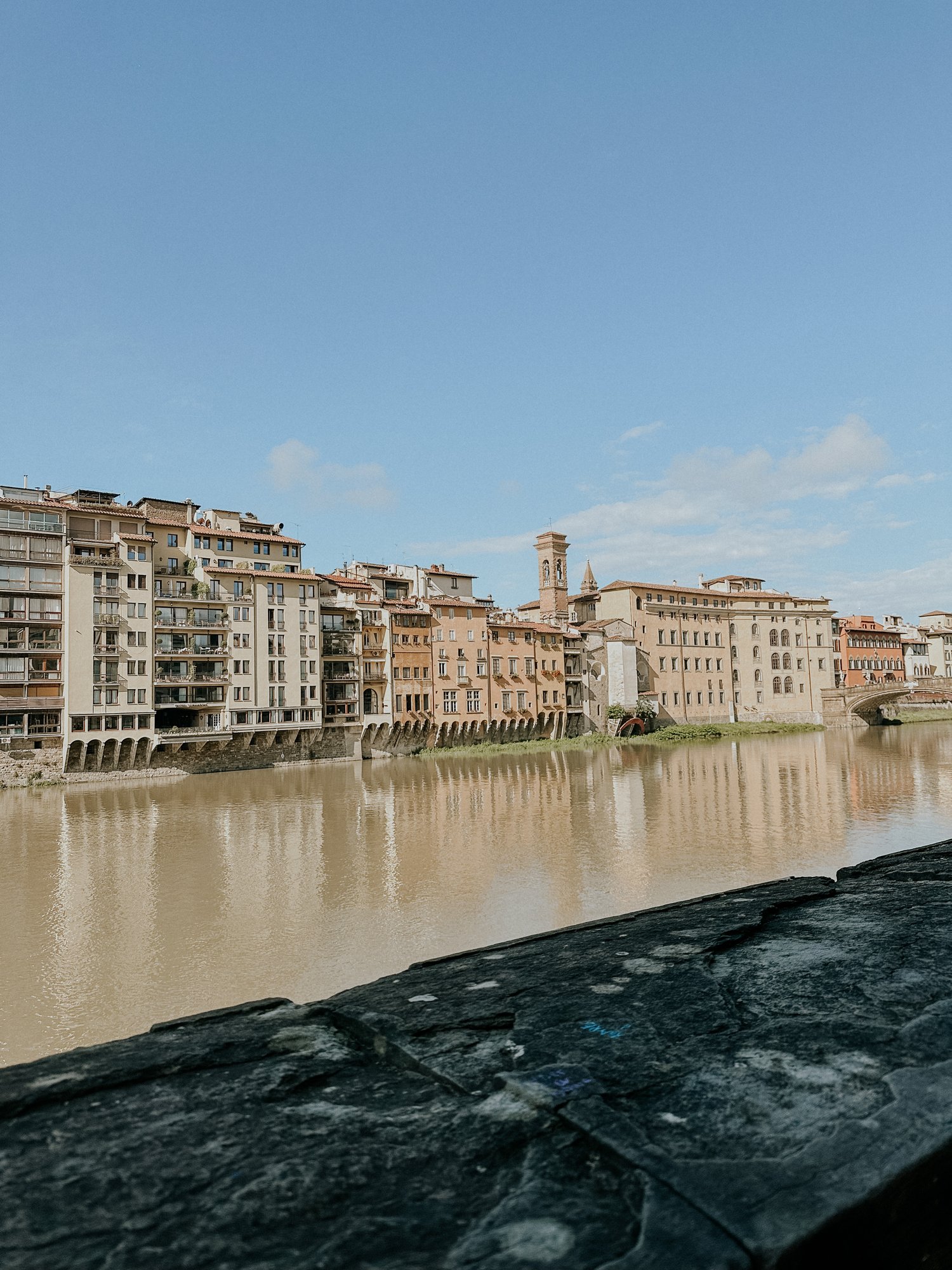
Before diving in:
Download Rick Steves's Florence audio guides before you go. They're free, they're thorough, and they transformed the experience of walking through the Uffizi and the Accademia from impressive to genuinely moving. A little cheesy at times — his friend Lisa is a lot — but the historical context they provide for works like the Statue of David, Botticelli, and da Vinci is irreplaceable. Don't skip them.
Arriving in Florence
The fast train from Venice to Florence felt like no time at all — made all the better by a couple from South Carolina who turned the ride into a full conversation. First stop after arriving: lunch at Trattoria de' Pitti, a spot with great reviews close to the Airbnb. Homemade pasta on arrival is exactly the right way to begin Florence.
The 3-Day Brunelleschi Pass was one of the best purchases of the trip. It unlocks multiple Duomo complex sites and allows for early morning visits before the crowds arrive — with one caveat: the Duomo Dome climb requires scheduling close to arrival time. A hurried walk from lunch to find the correct line was involved, but the workers outside were helpful, and the timed ticket system kept the line to about 15 minutes.
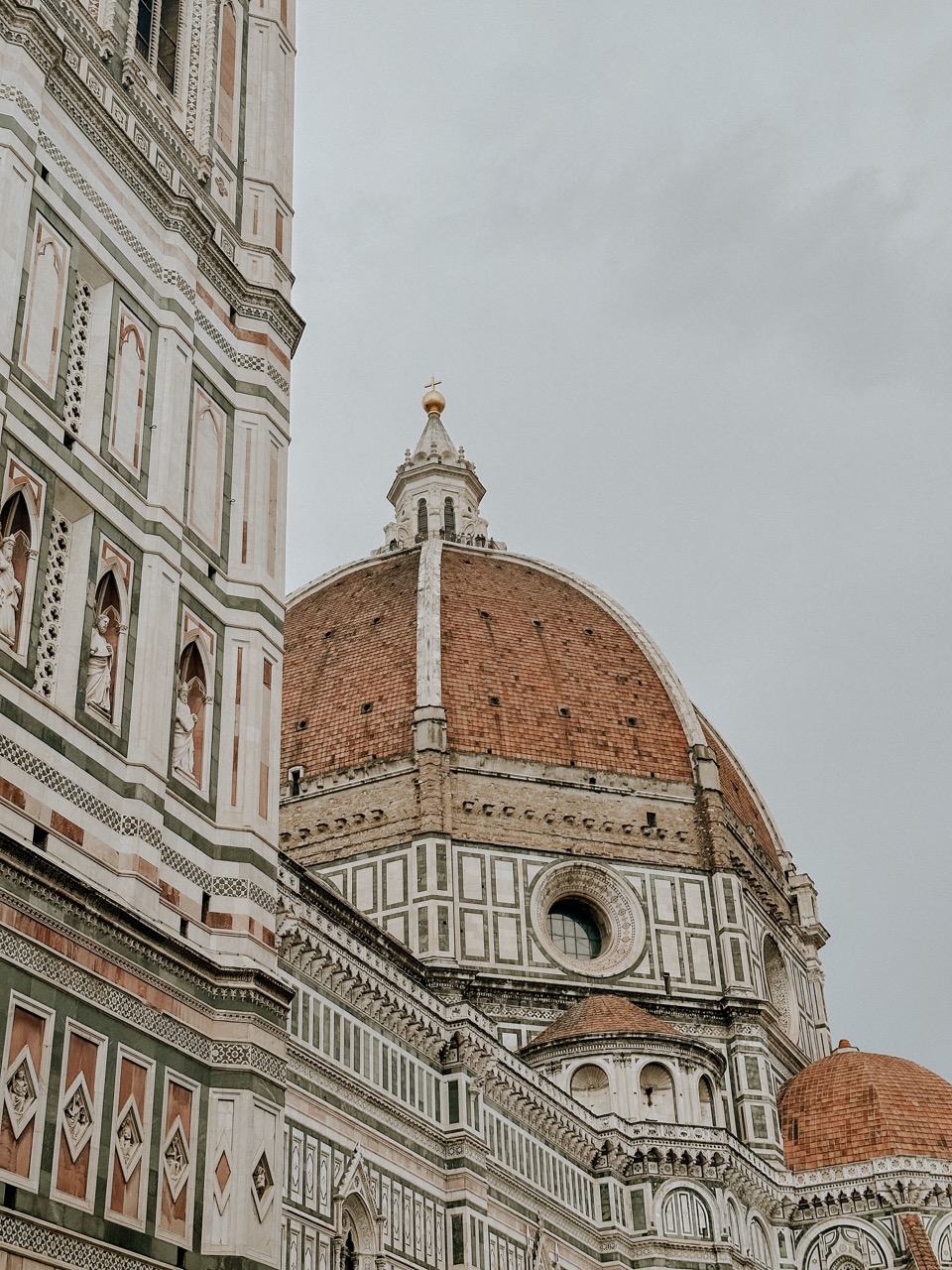
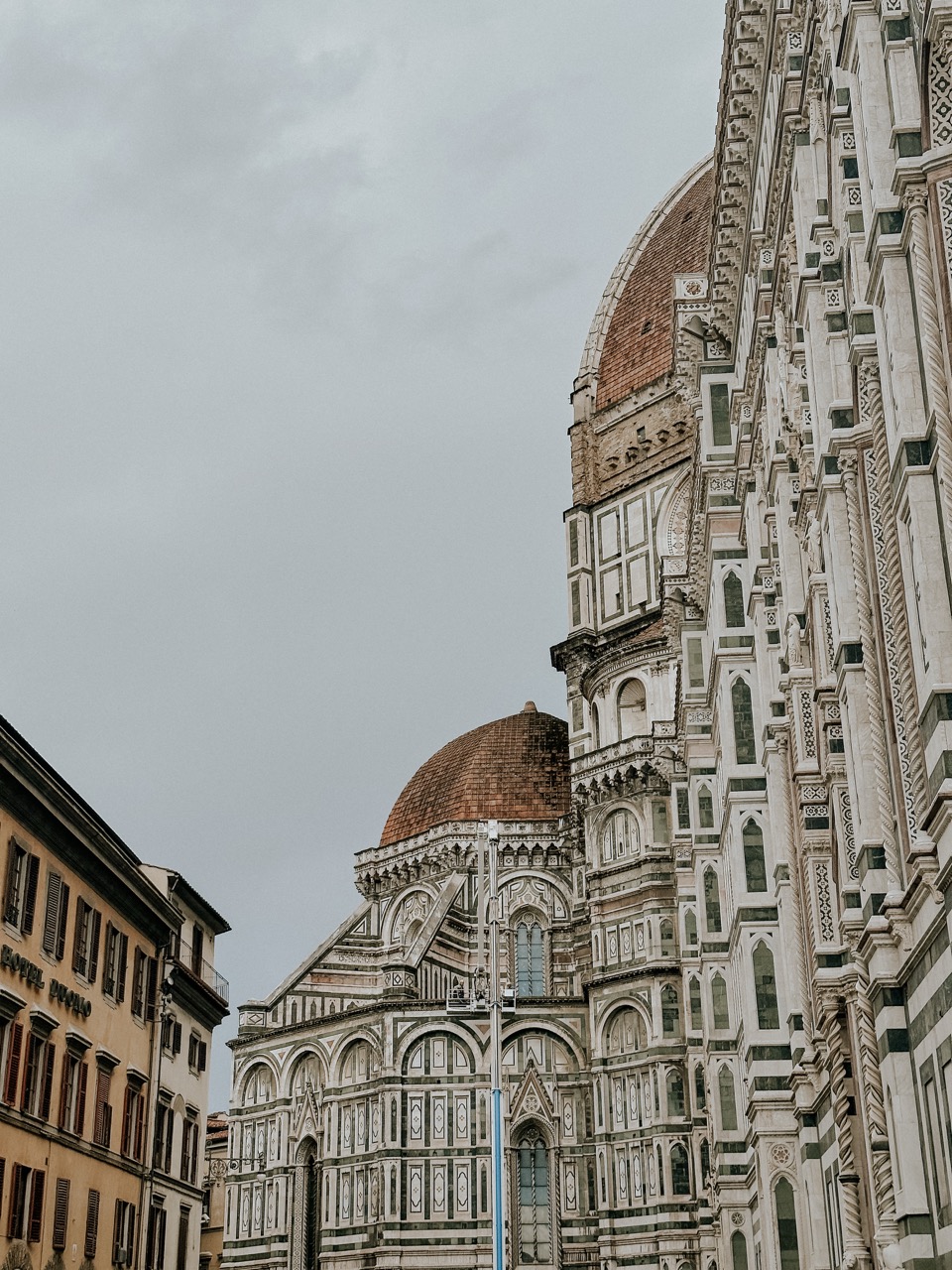
The Duomo Dome Climb
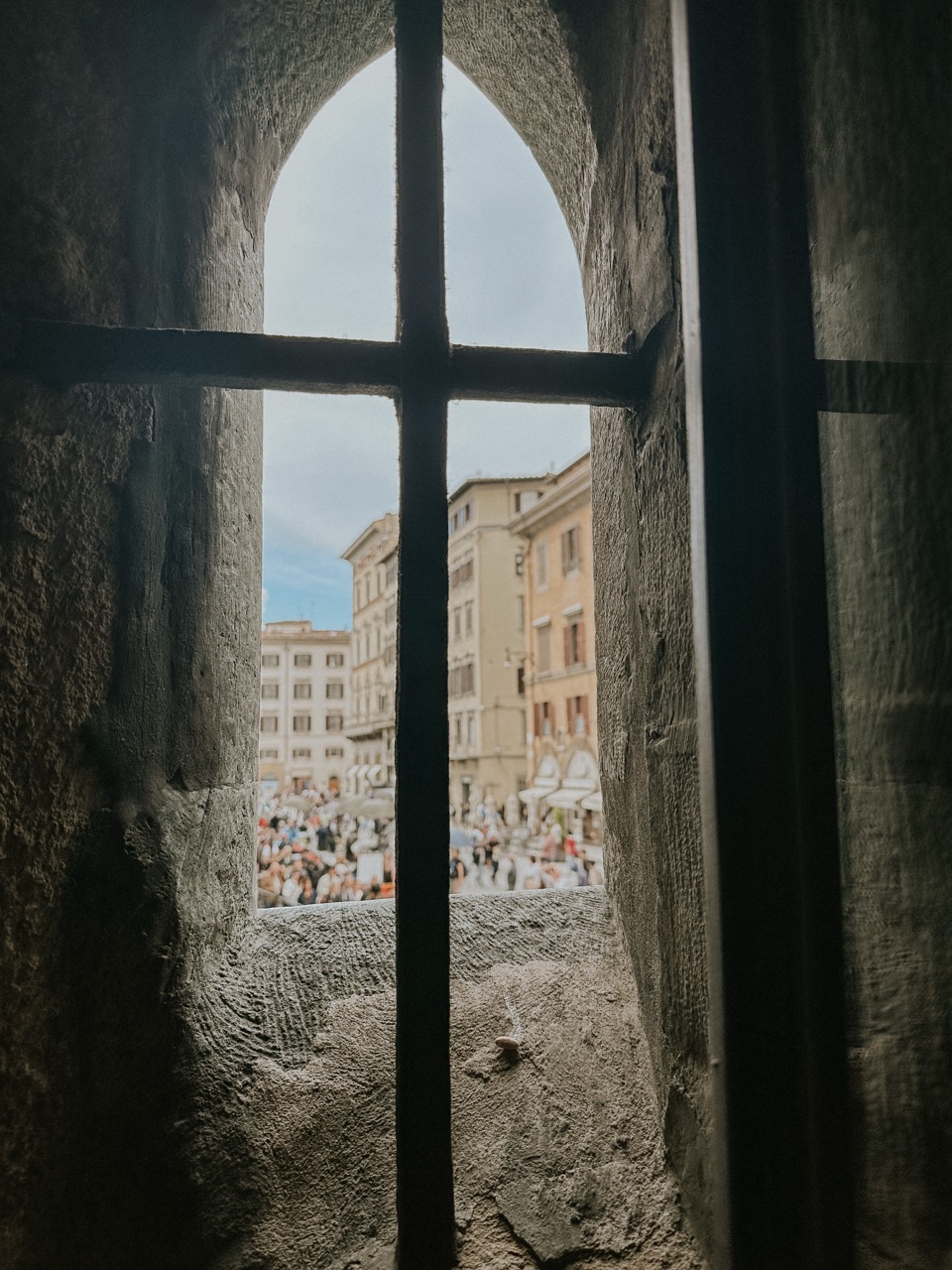
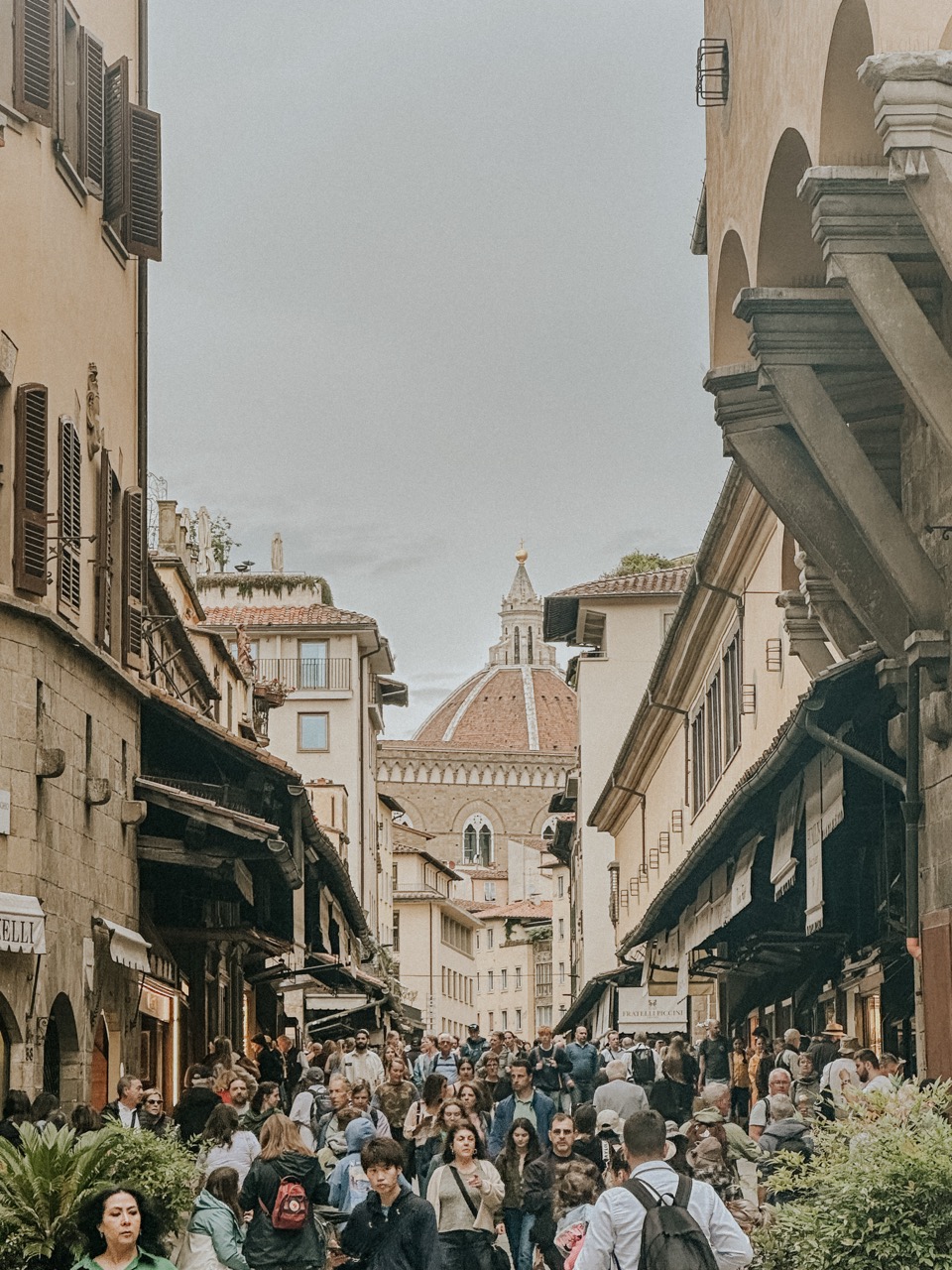
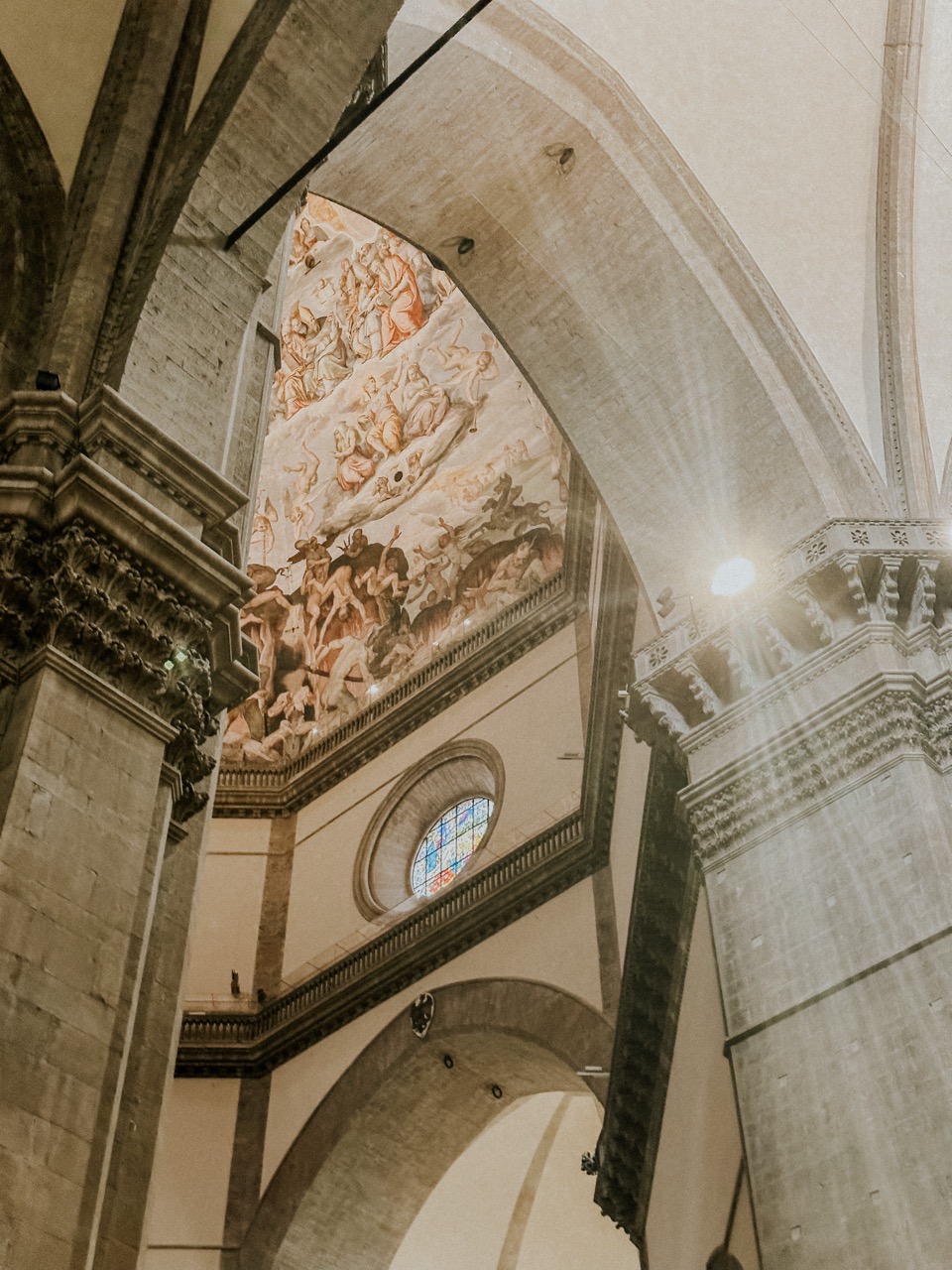
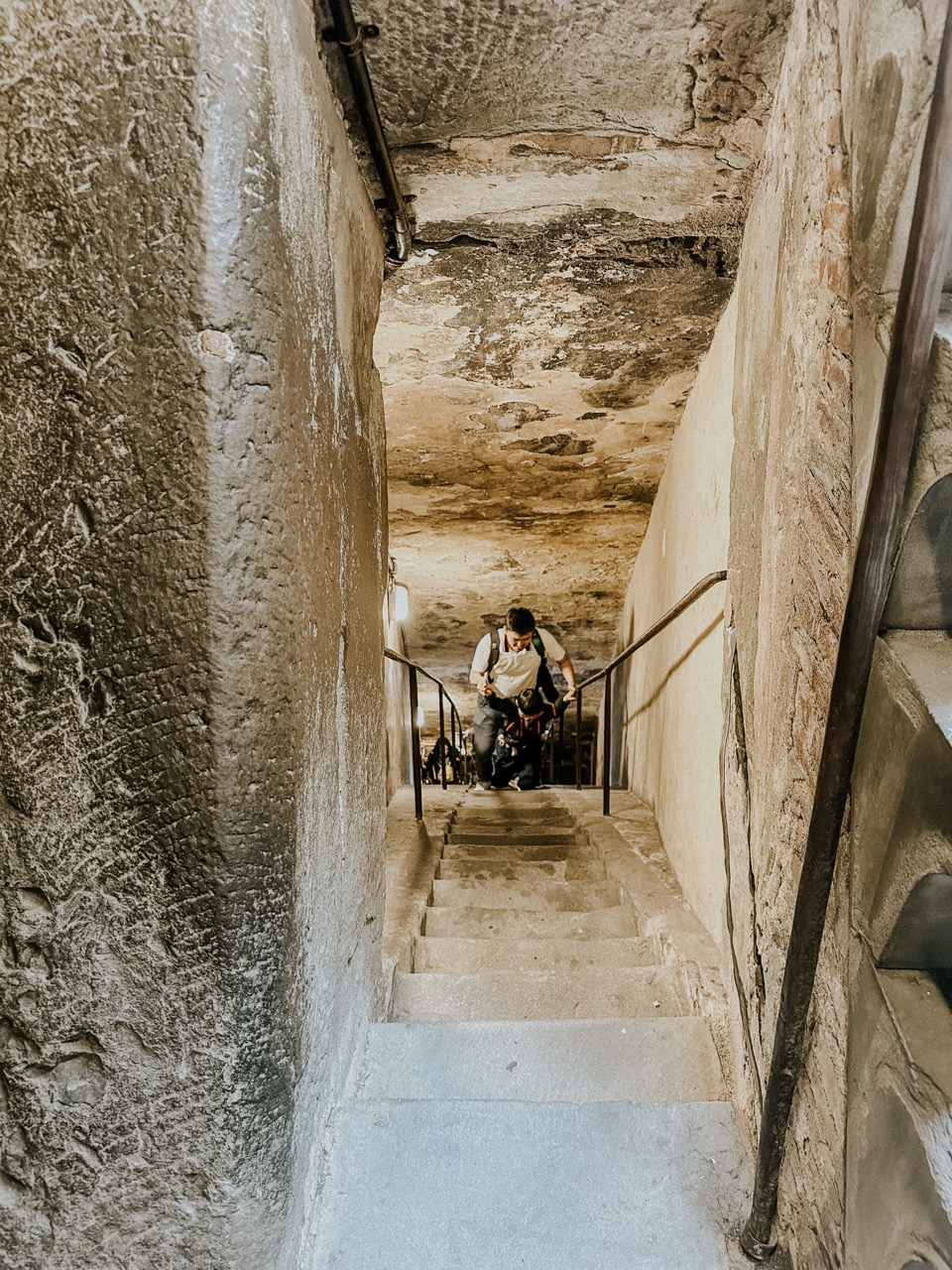
The climb is no small undertaking. Looking at the dome from street level, the height differential between start and finish is obvious — and still somehow surprising once you're inside the spiral stairs. The ascent is relentless. A brief respite at the first interior railing offers a view of the people below that makes them look like ants — and also delivers a wave of claustrophobia as you stand packed in with dozens of others who can't move either.
The second phase — scaling from the interior of the dome to the very top — is genuinely wild. It feels like climbing a mountain inside a building. A four-year-old accomplished this alongside the rest of the group. Several adults did not finish.
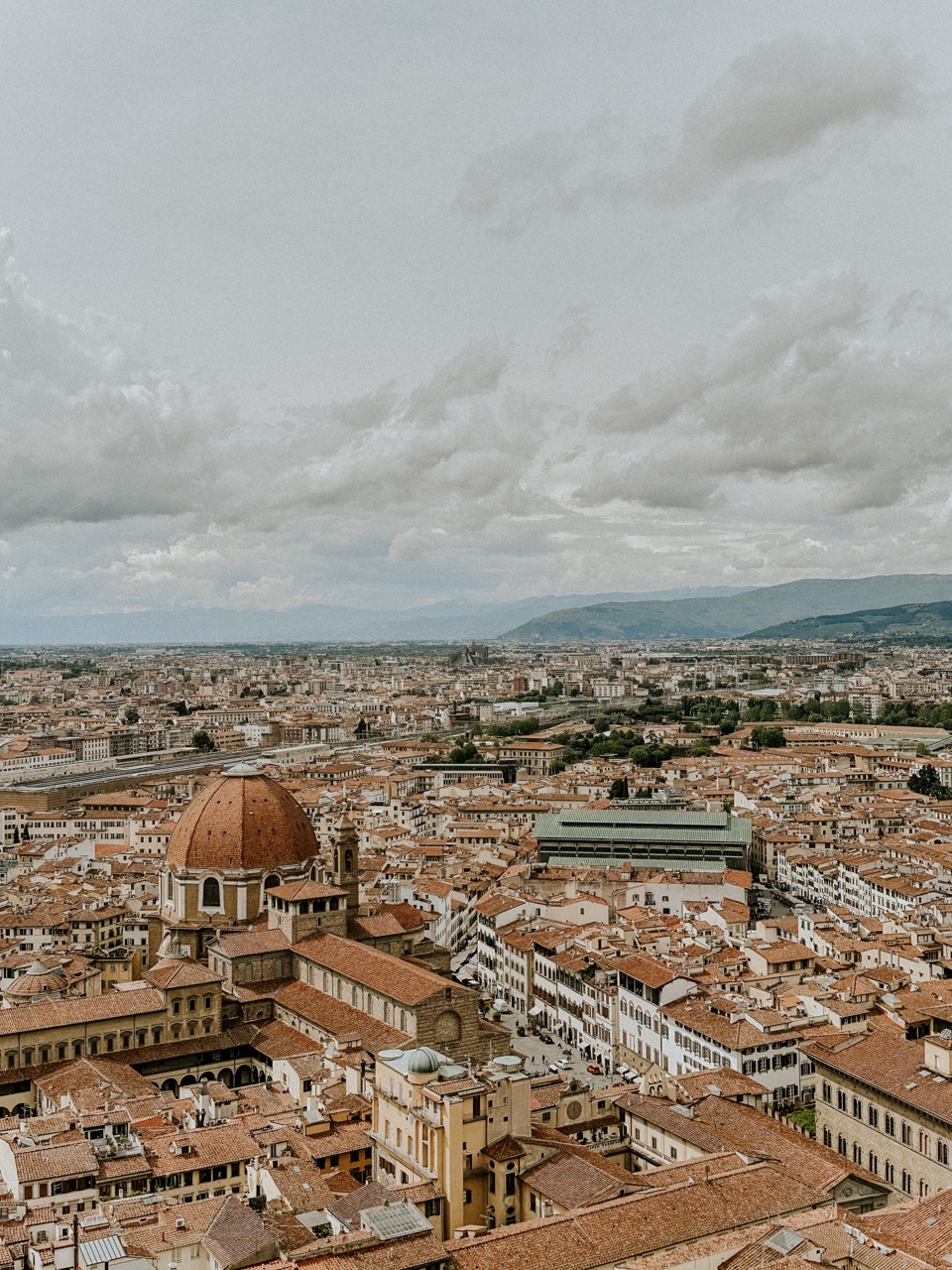
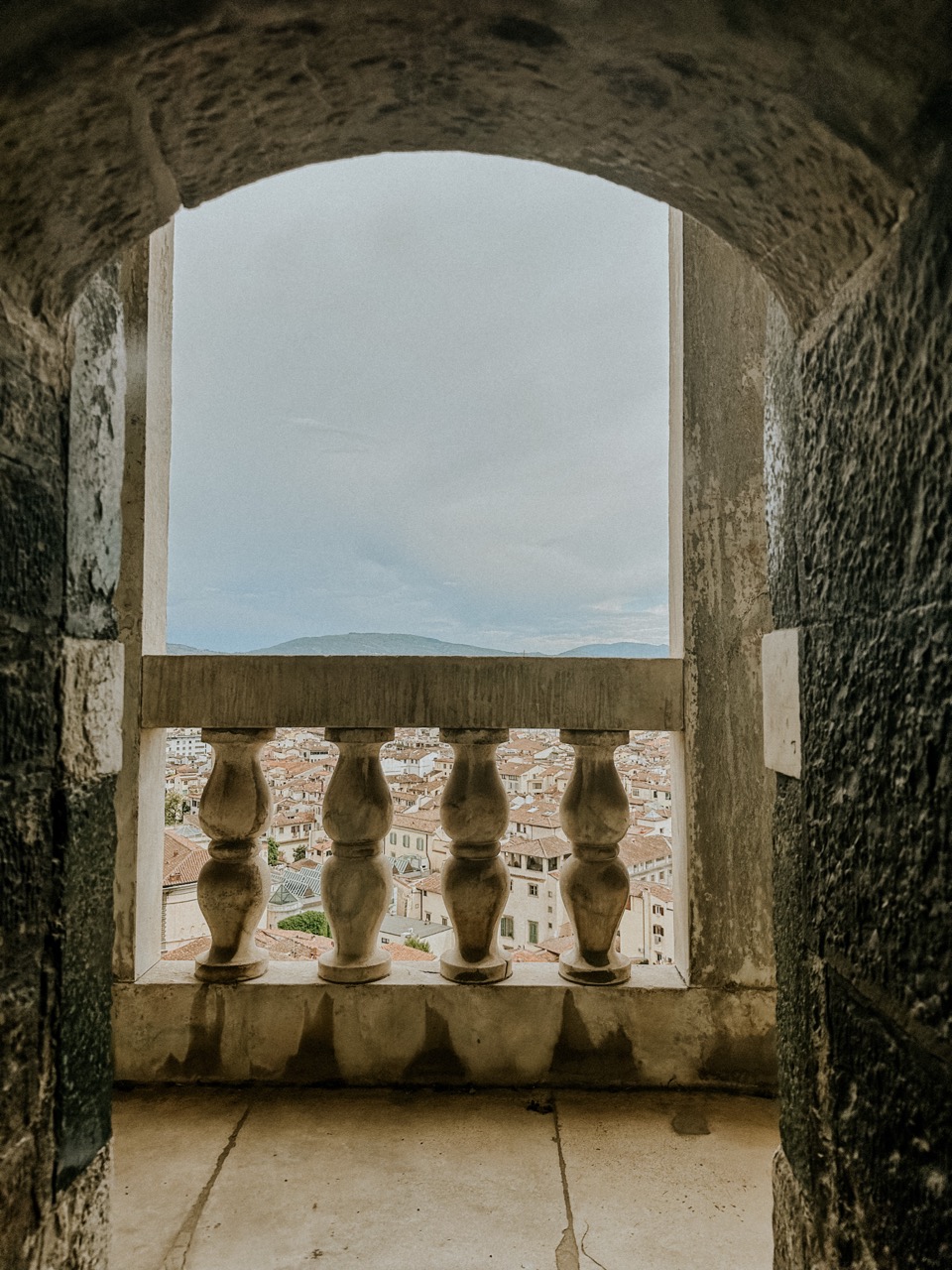
The view from the top is worth every step: every side of the city, the rolling mountains of Tuscany, an ocean of terracotta rooftops.
One strong recommendation: do this on a day when you're well-fed and well-rested. It rewards preparation.
Early Wine & Charcuterie — Beccafico
After the dome, an early stop at Beccafico for wine and a charcuterie board. The pecorino and grana padano were exceptional. This is the kind of stop that feels indulgent and turns out to be completely necessary.
The Uffizi Gallery
Up before the crowds, apple hand pie in hand, and to the Uffizi before the lines built up. Tickets are collected at one office, then you cross the courtyard to join the entry line — both moved quickly.
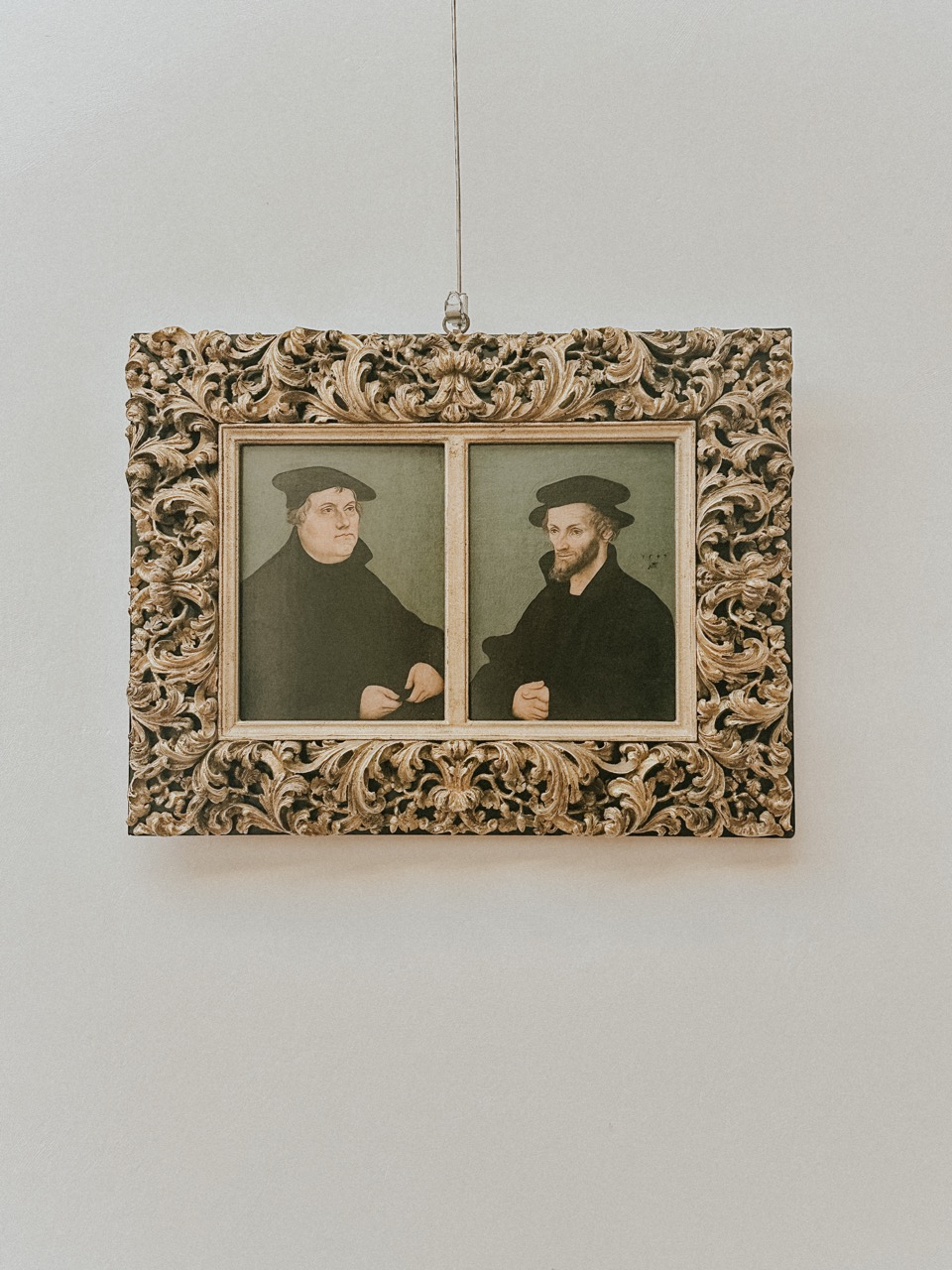
Rick Steves's Uffizi guide is the move here. What made it exceptional wasn't just the works themselves — it was understanding the shift between eras. Pre-Renaissance painting was reserved for saints and holy subjects, flat and without perspective.
The Renaissance broke that open entirely: realism, depth, humanity in full form, beauty as an expression of the divine.
Watching that shift happen across rooms, with context in your ears, is a completely different experience than wandering through without it. Works by Leonardo da Vinci, Raphael, and a rare Michelangelo are all here. Don't rush.
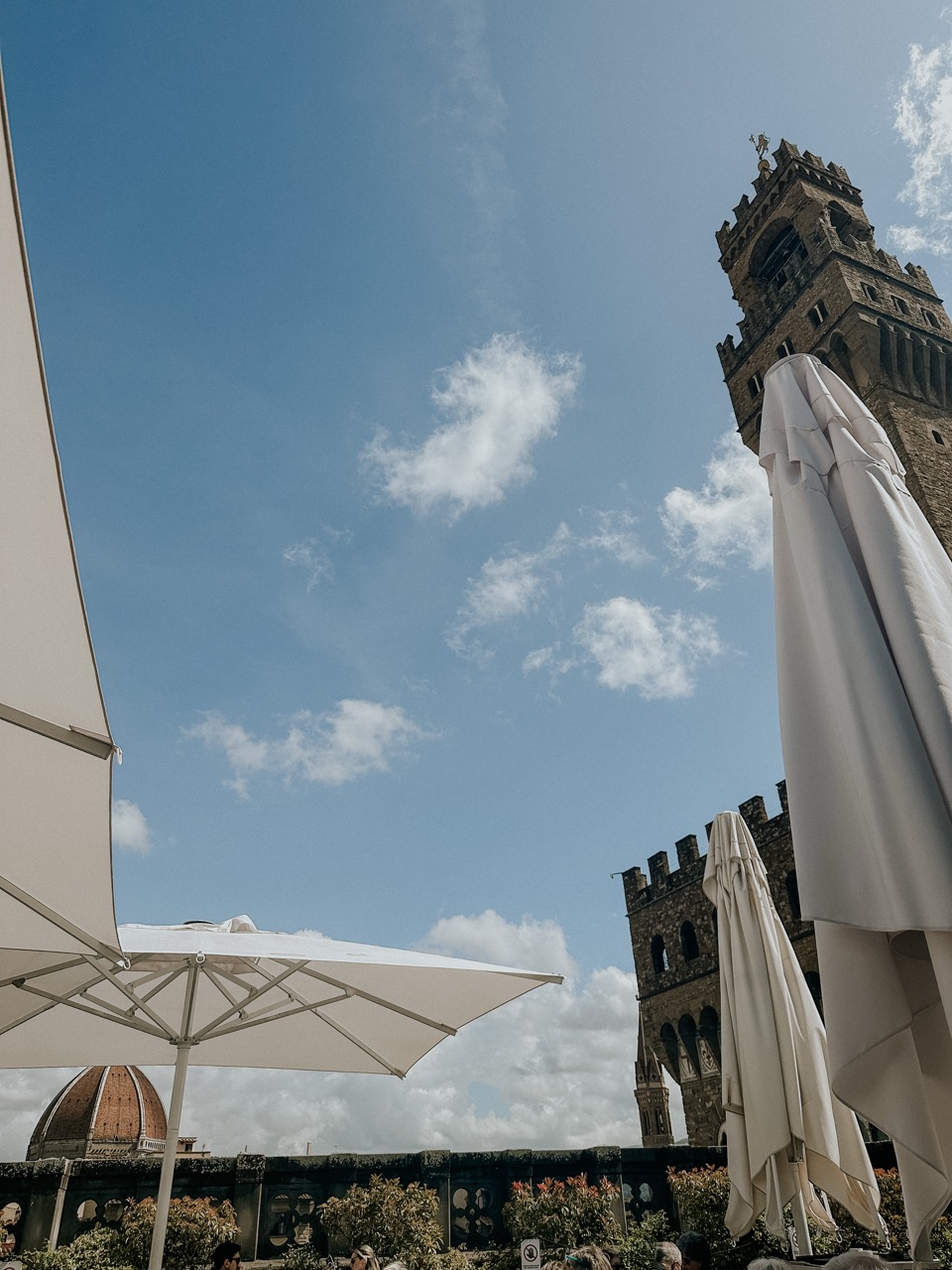
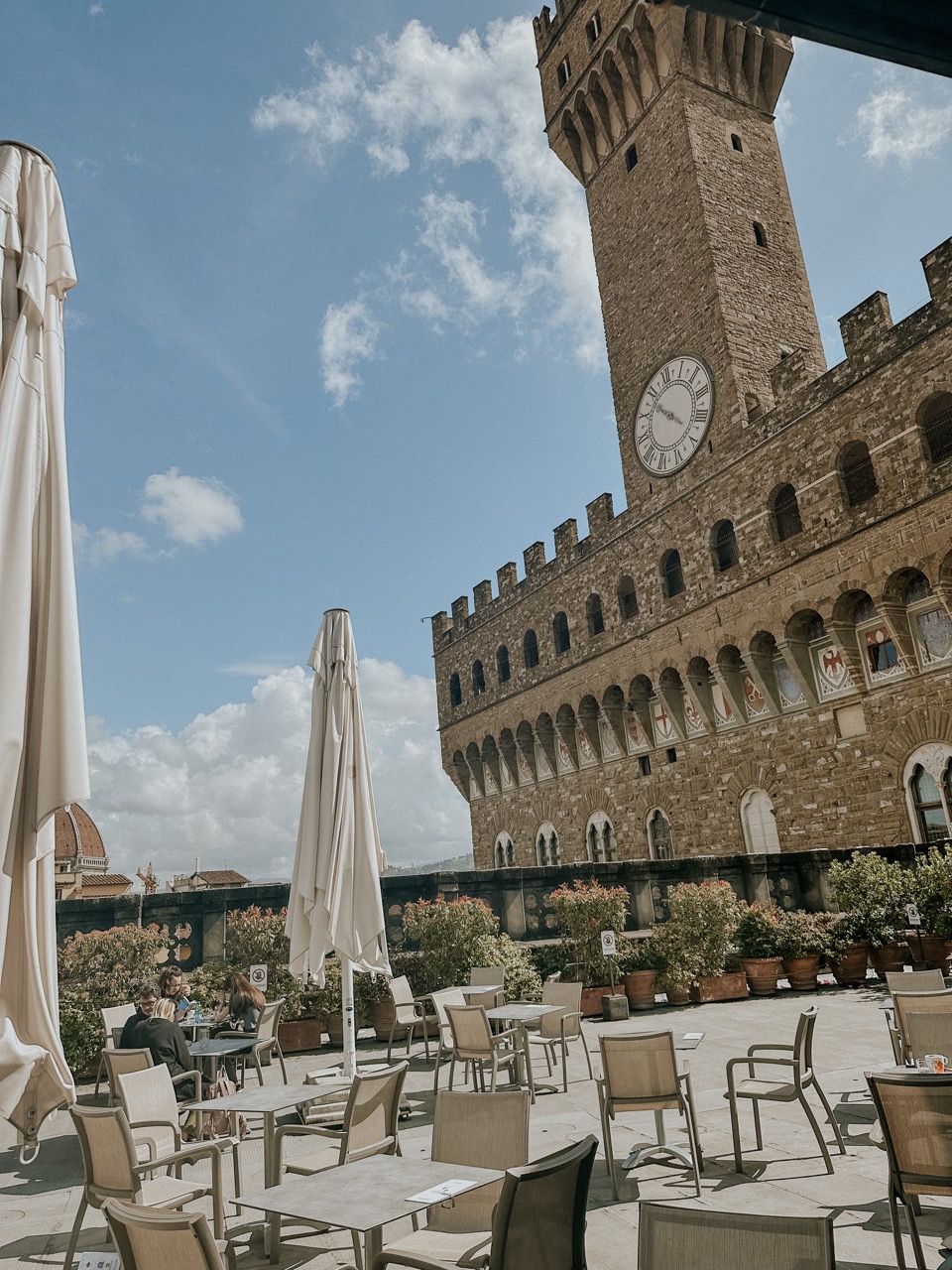
Lunch on the Uffizi terrace is worth building into the visit — beautiful view of the Pitti Tower and a portion of the Duomo, and the food is genuinely good.
*One note: the bathroom situation at the Uffizi was a significant challenge during this visit — one closed for maintenance, the other requiring a full return to the entrance side of the museum. Hopefully a temporary situation, but plan accordingly.
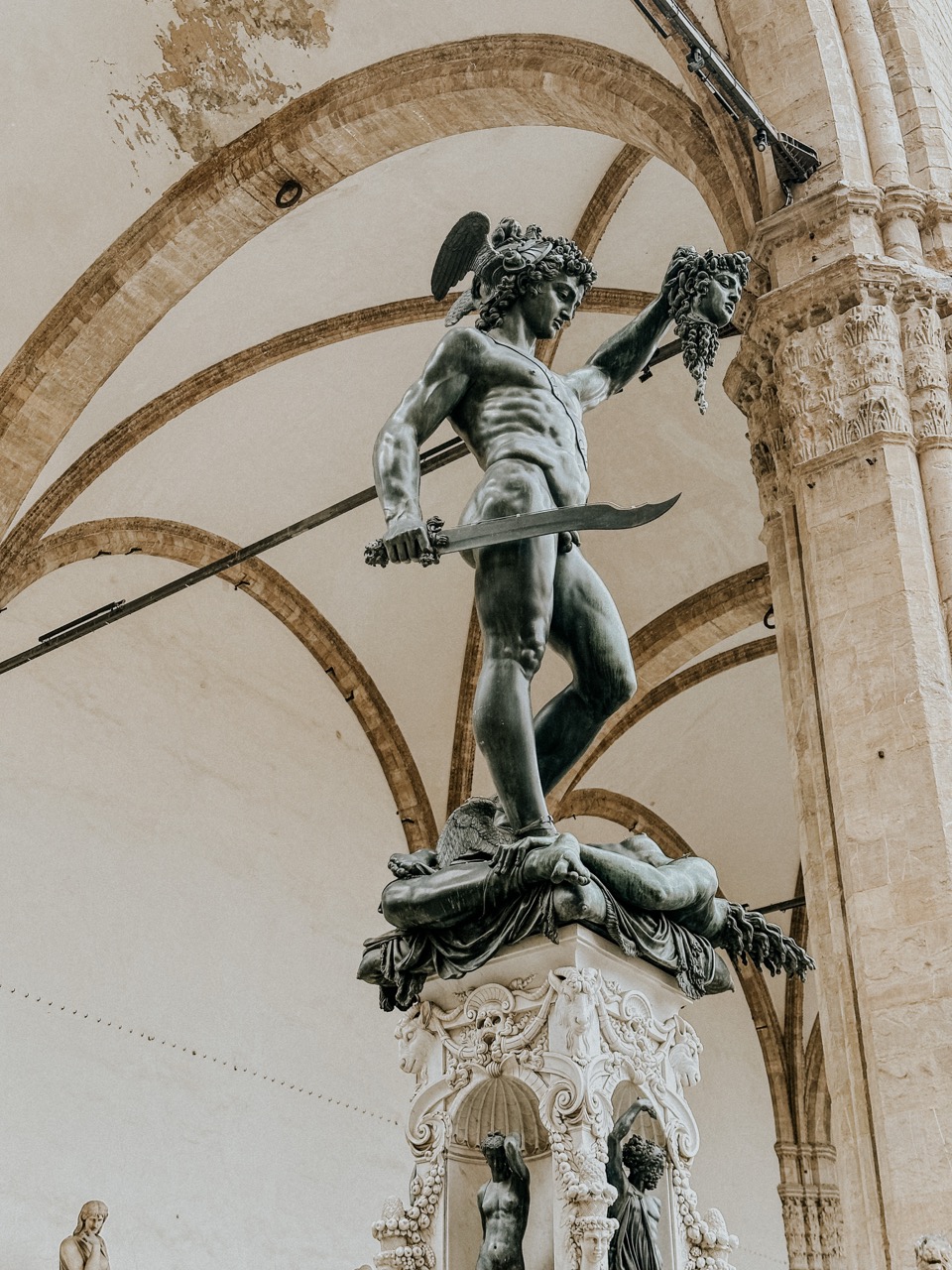
Shelter From the Storm with Pasta
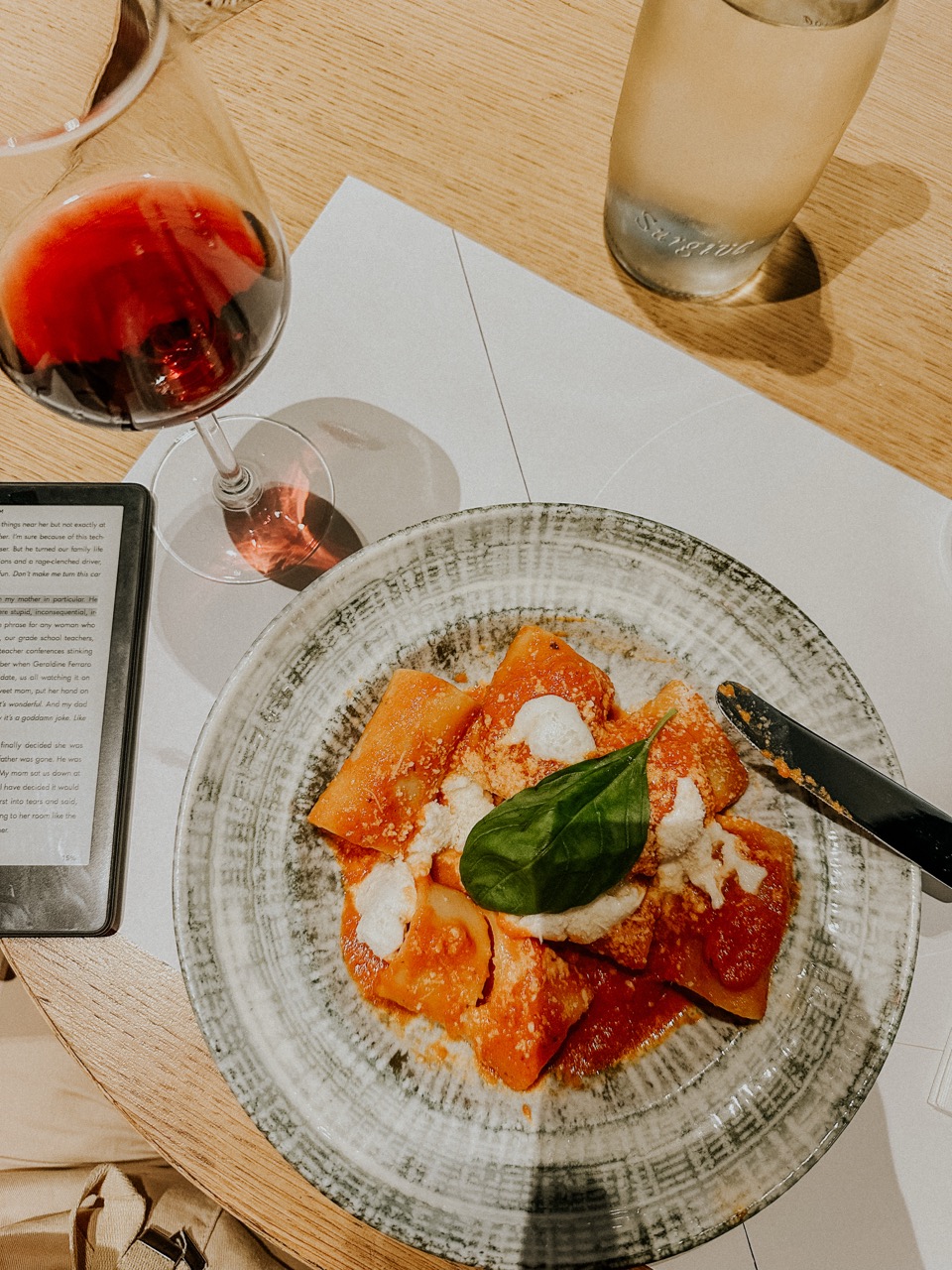
A proper Florentine storm rolled through in the afternoon — hail that left the ground looking like snow. Once it passed, a rainy walk led to Obica, which felt slightly fancy but delivered on both atmosphere and food. Homemade pasta, excellent wine, and a neighboring table's pizza that made ordering pasta feel like a mild mistake. A very cool spot.
A Historic Detour — Officina Profumo Farmaceutica di Santa Maria Novella
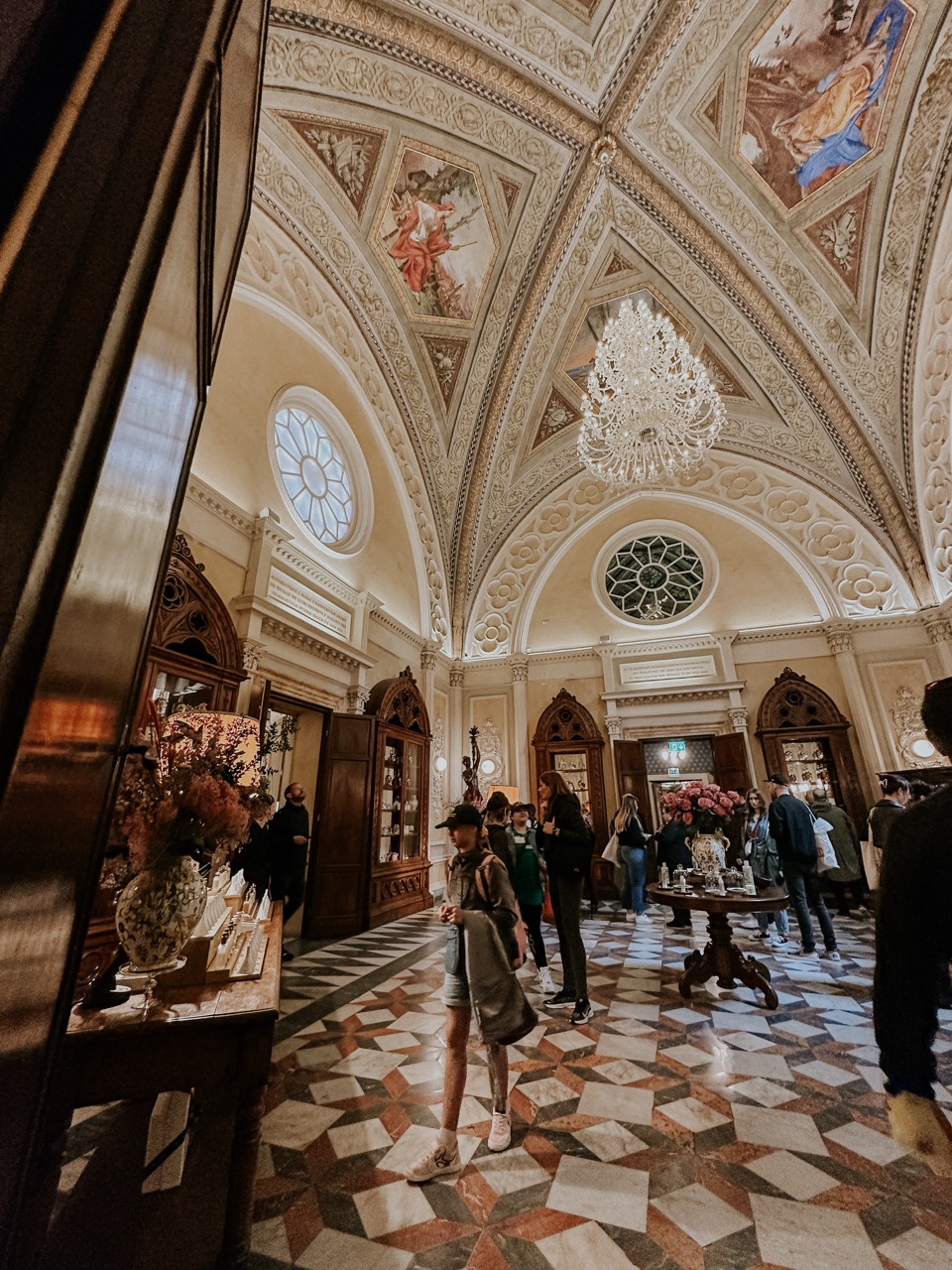
Just nearby, a stop at the Officina Profumo Farmaceutica di Santa Maria Novella — a pharmacy and perfumery whose roots date to 1221. Beyond the remarkable perfumes, a collection of old tools used to grind natural materials for treating ailments made for a genuinely fascinating visit. Worth a wander even if you don't buy anything.
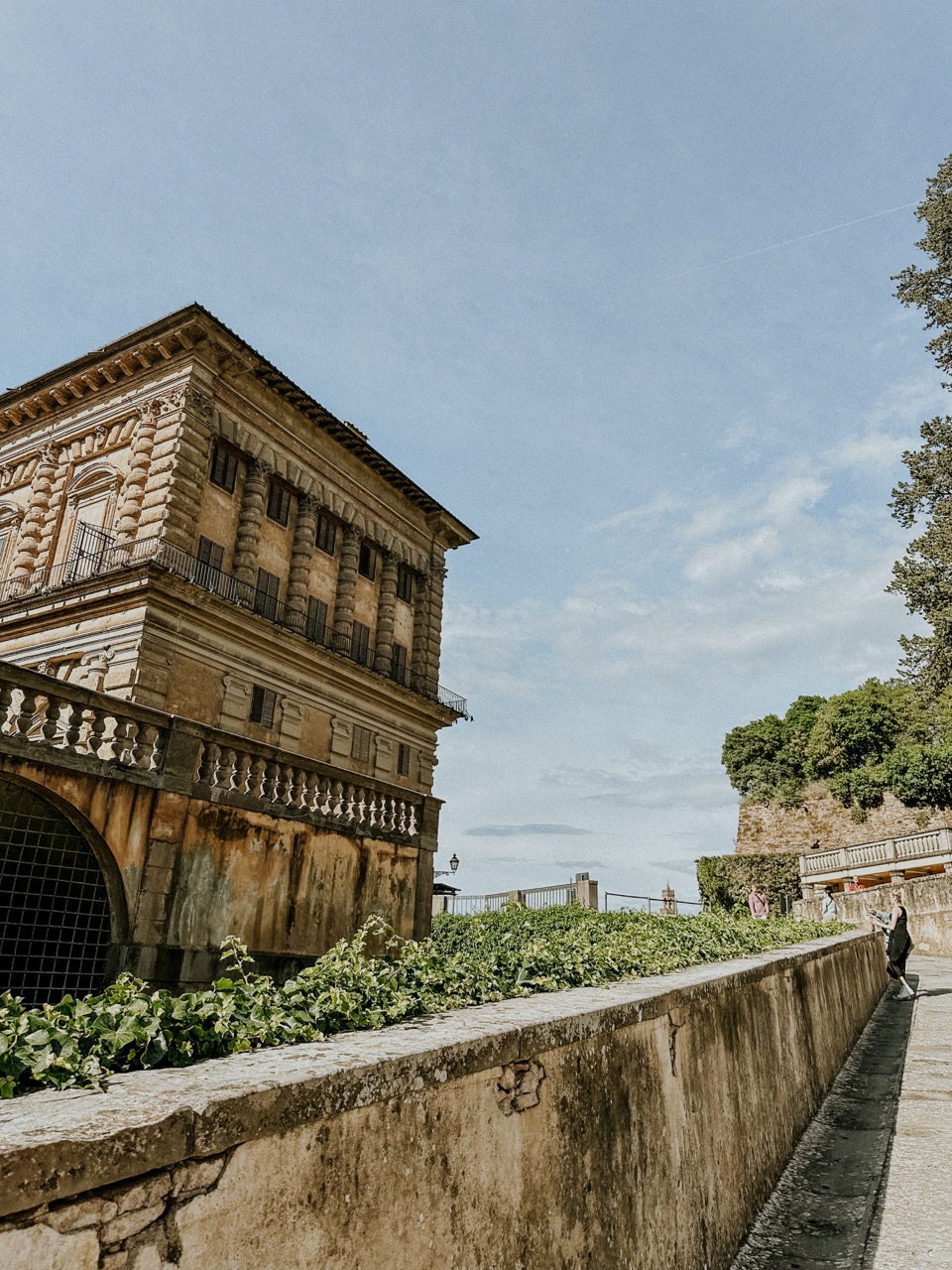
With the sun finally out, the Boboli Gardens were next — immaculate, expansive, and mostly uphill, with distinct areas for botanicals and citrus.
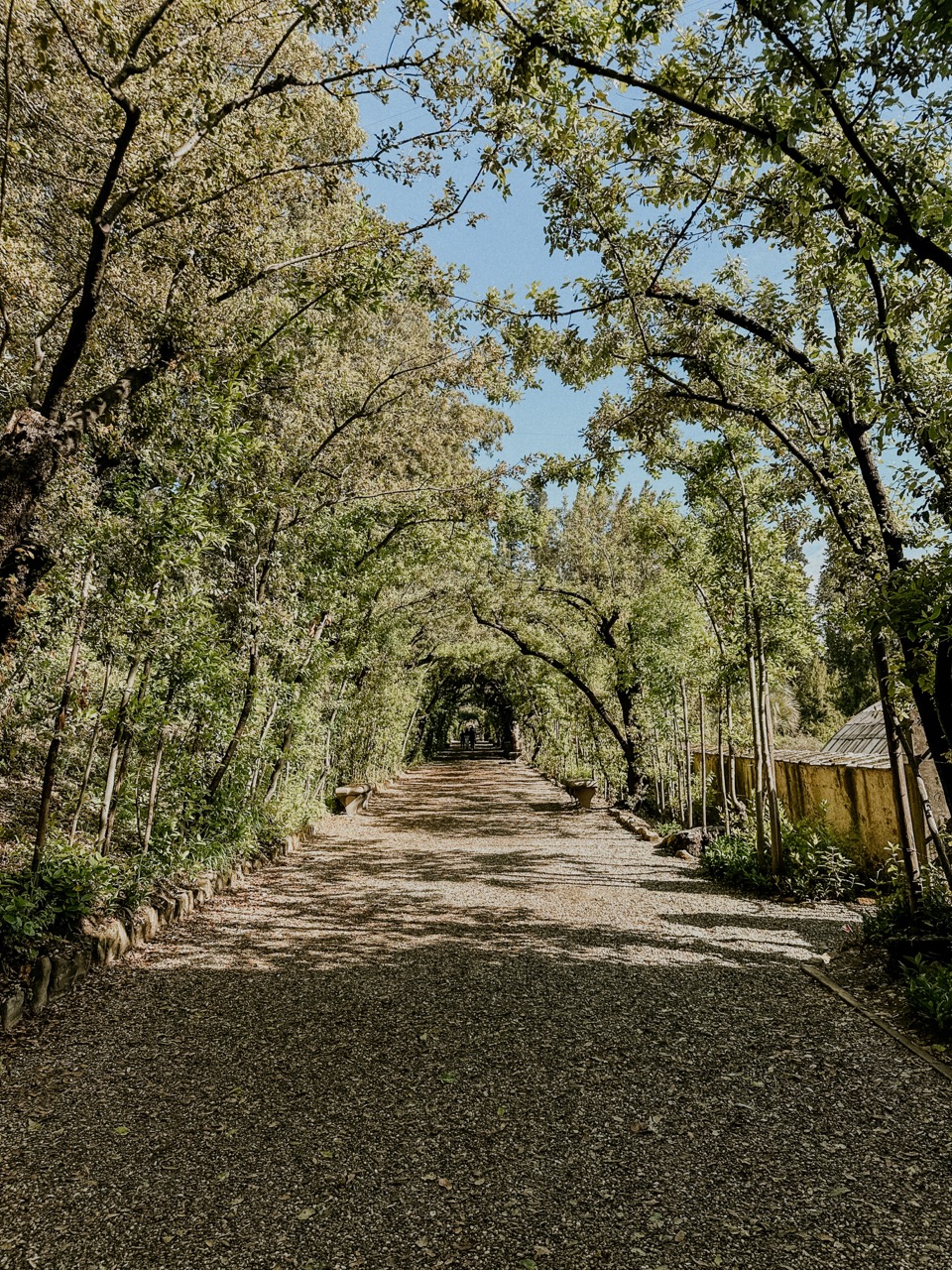
The original mission was to find a wisteria tunnel seen on Pinterest. It took about an hour to track it down in the adjoining Bardini Gardens — a separate garden included in the same ticket and, honestly, the better find.
Bardini is more compact than Boboli but beautifully manicured — an English garden on a hillside. The wisteria was perfectly in bloom and then perfectly destroyed by the earlier hail. A bummer of notable proportions.
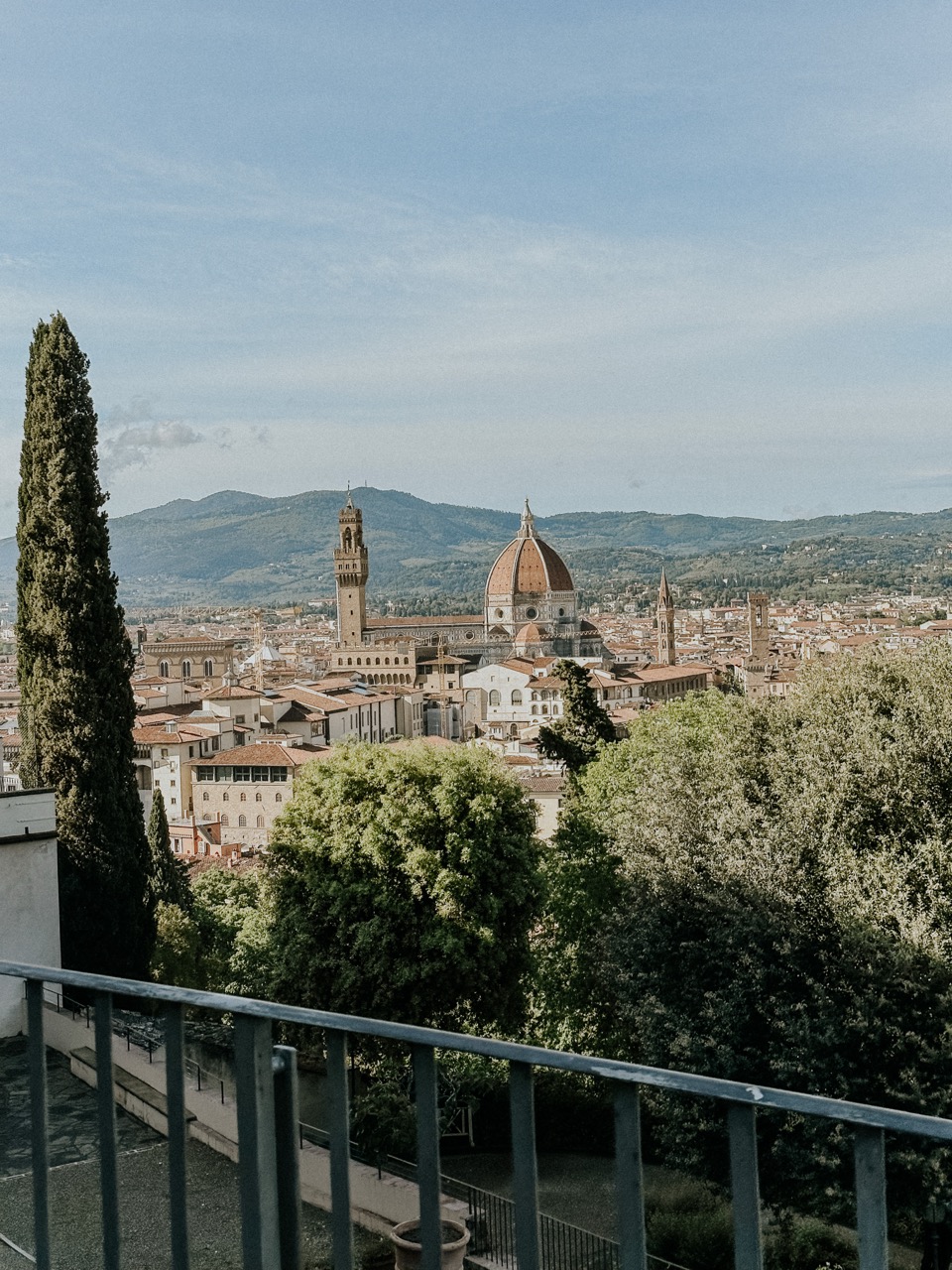
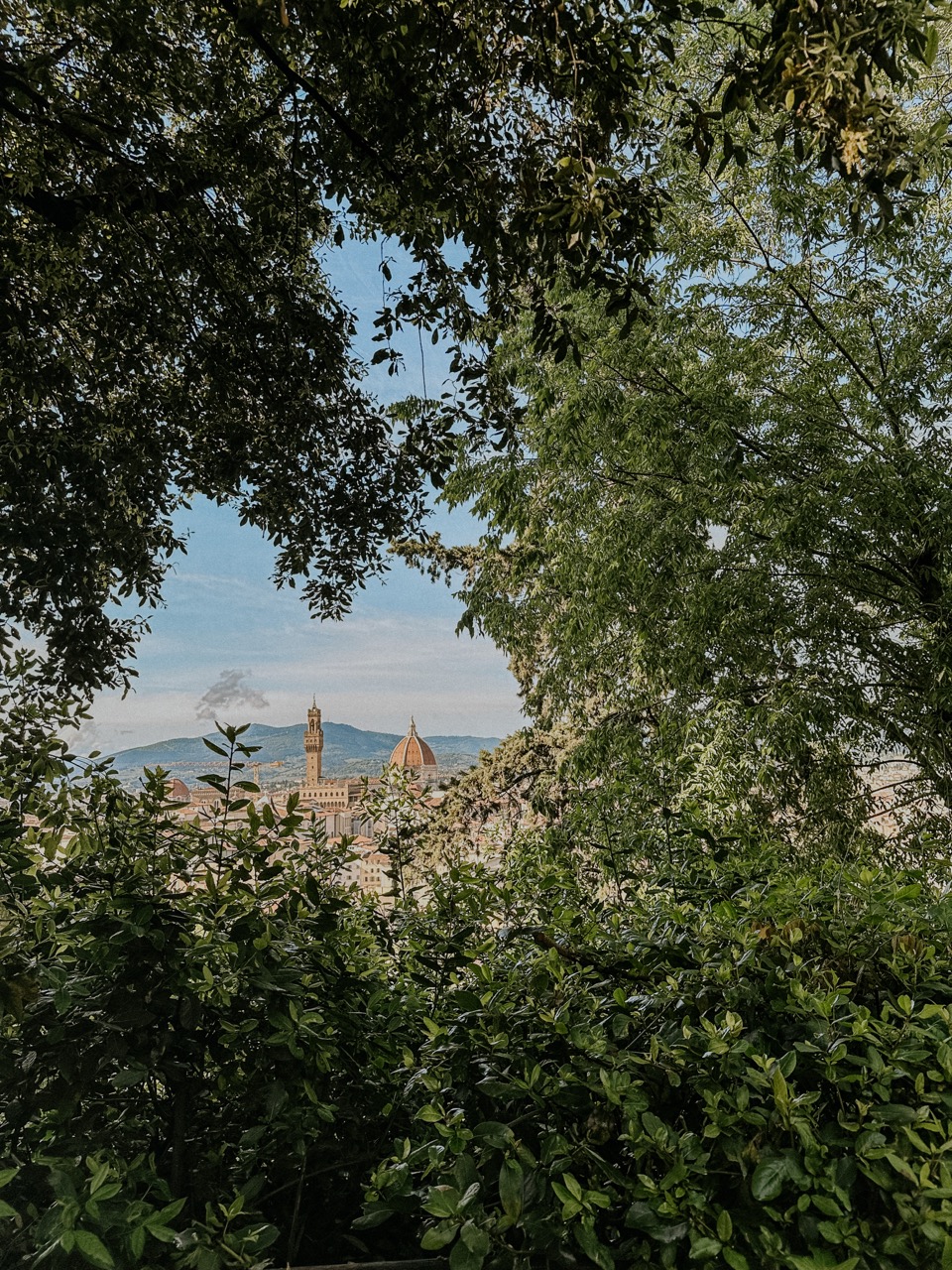
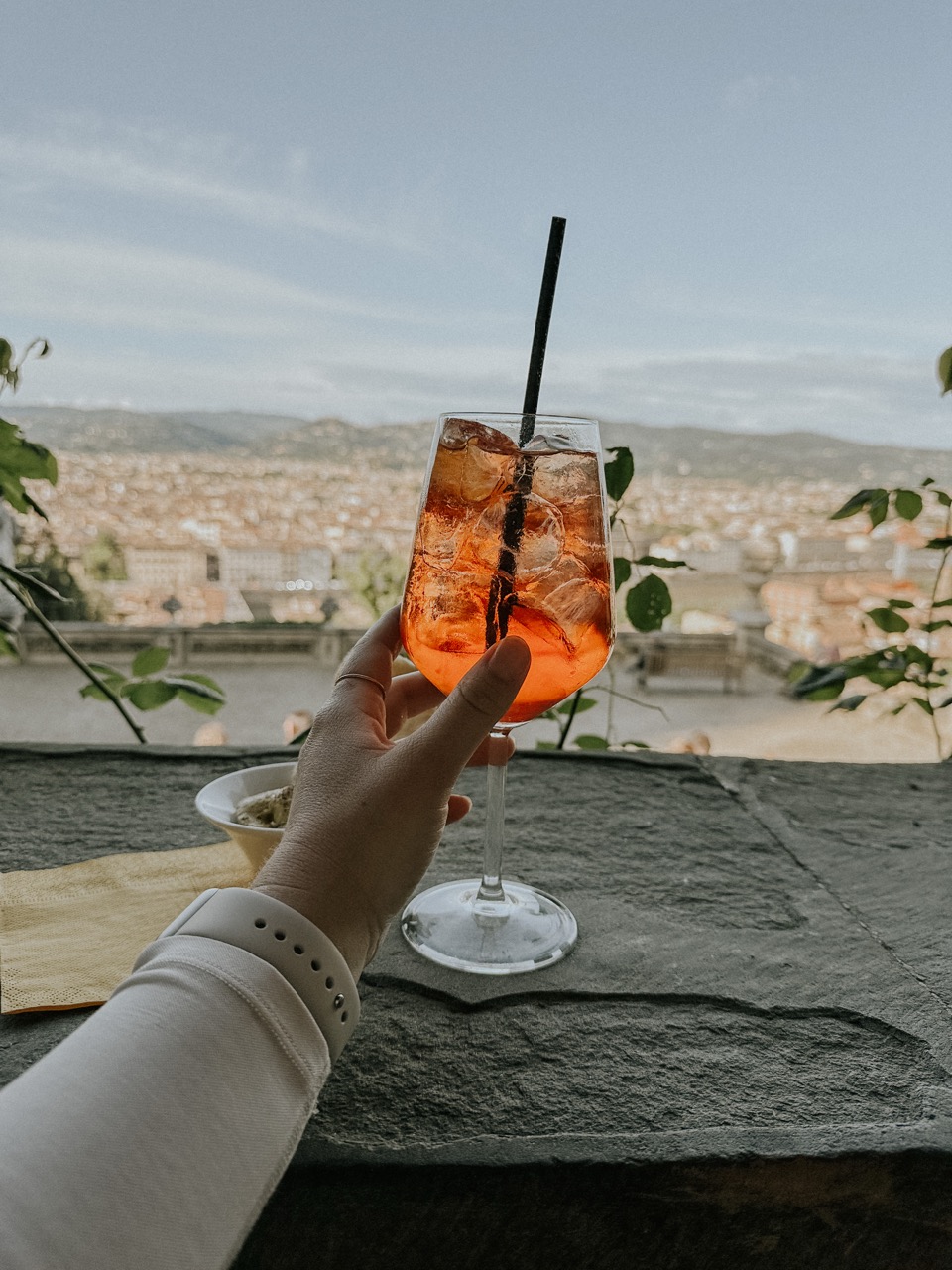
What wasn't a bummer: the bar at the top of the Bardini tunnel, overlooking the city of Florence, with an aperitif in hand at 7 PM when the gardens had technically closed at 6. The staff were in no rush. The view was extraordinary. This is one of the single best moments of the entire Italy trip.
(The American club music playing in the background was aggressively wrong for the moment. AirPods fixed it. A small but important travel tip.)
Pizza to go on the walk home. A perfect day.
Early Morning & the Baptistery
One of the quiet pleasures of Florence: walking the streets at 7 AM before the city fully wakes up. With an Accademia ticket for 10 AM, breakfast was taken at Caffè Scudieri, a highly-rated coffee spot facing the Baptistery. Architectural views with a cappuccino is a deeply reasonable way to start any morning.
With time to spare, a quick stop inside the Baptistery — undergoing renovation, but presented thoughtfully in spite of it.
Michelangelo's David — Accademia Gallery
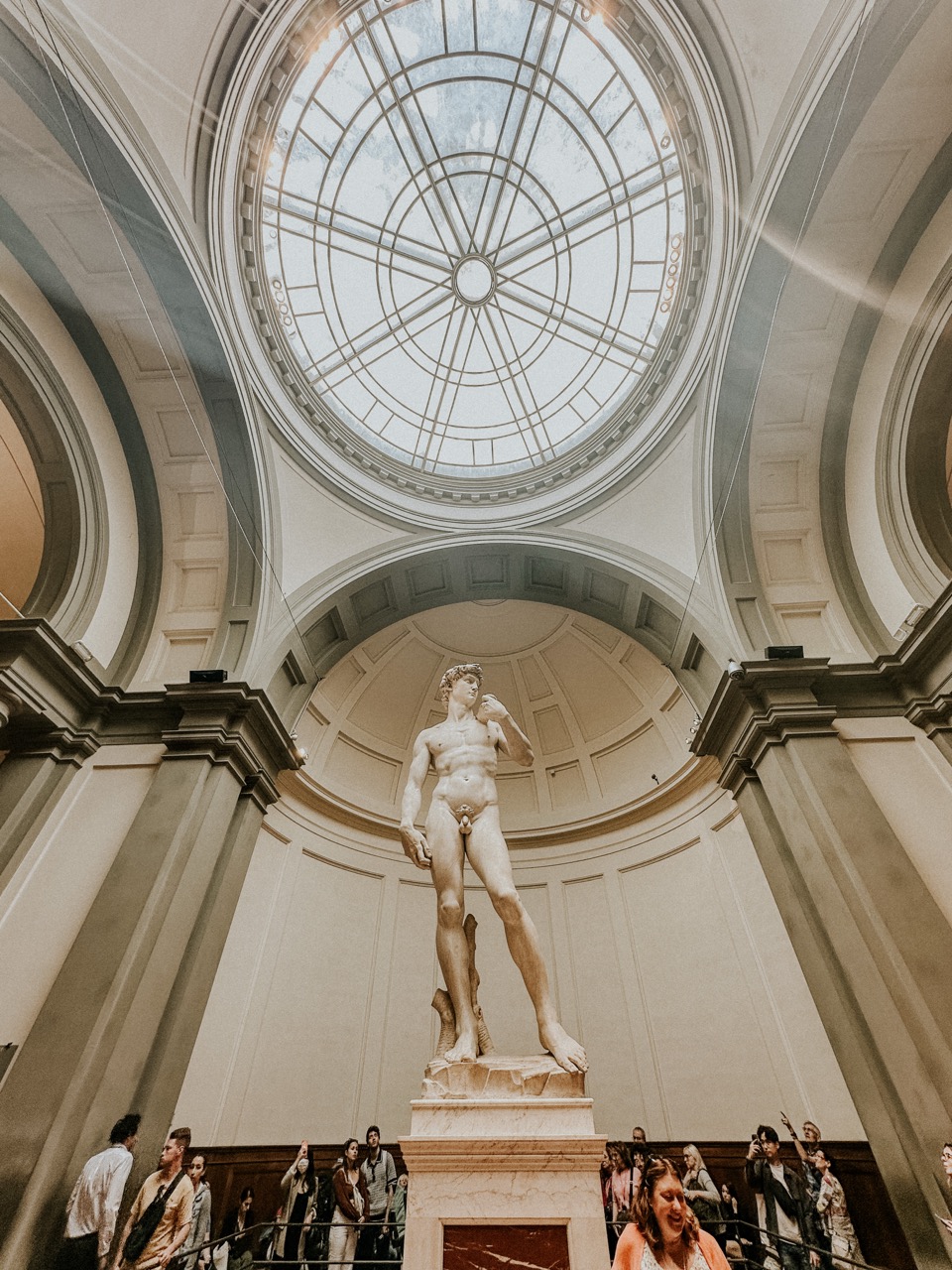
No trip to Florence is complete without it. The Accademia has the museum line system fully dialed in — no need to arrive early, the crowds move efficiently. What was surprising: how close you can actually get to the statue, and how much larger it is than expected.
Rick Steves's context here is particularly useful — David was originally one of the statues positioned to guard the Pitti Tower. A replica still stands there today.
Lunch — Gustaosteria
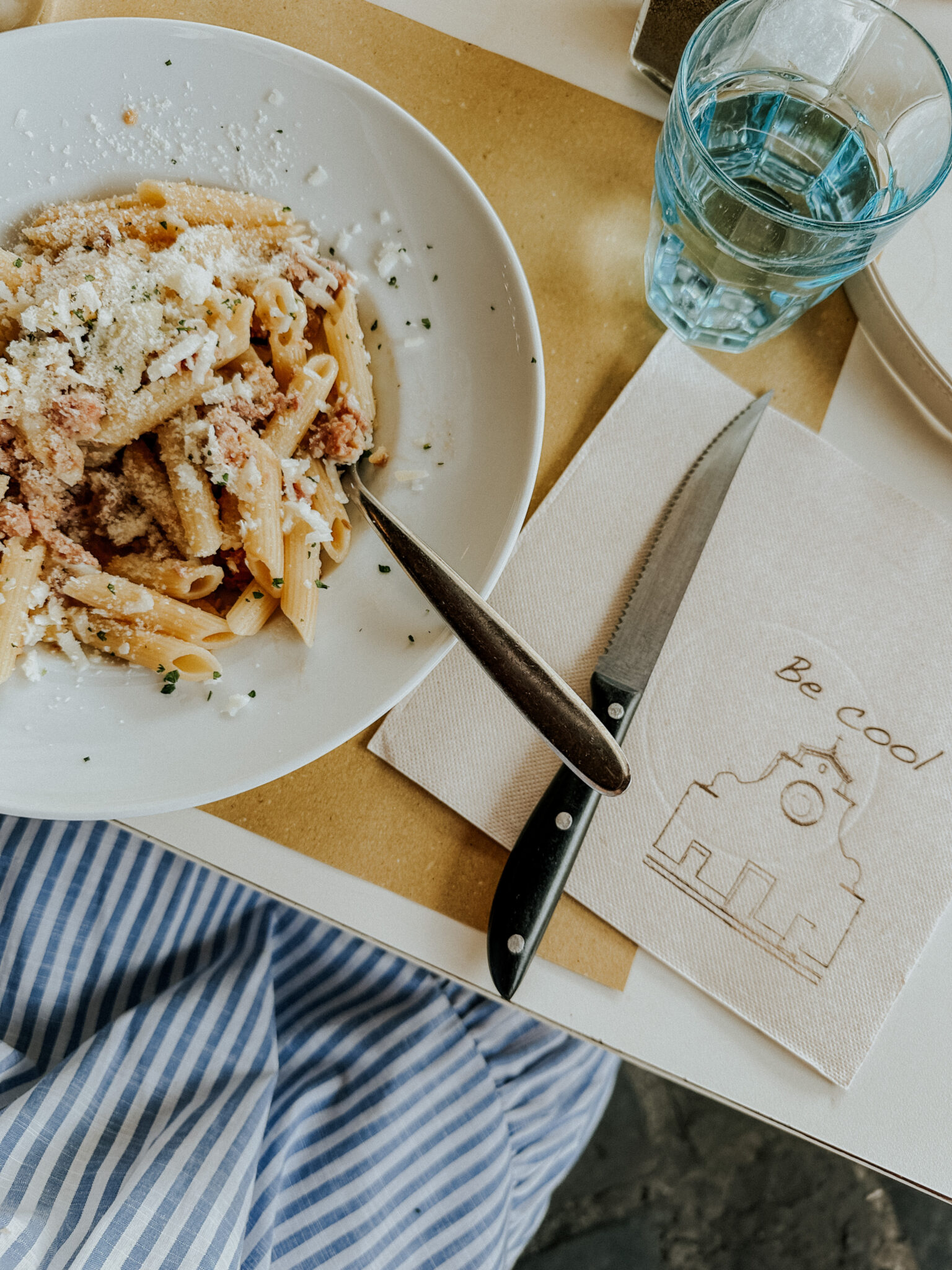
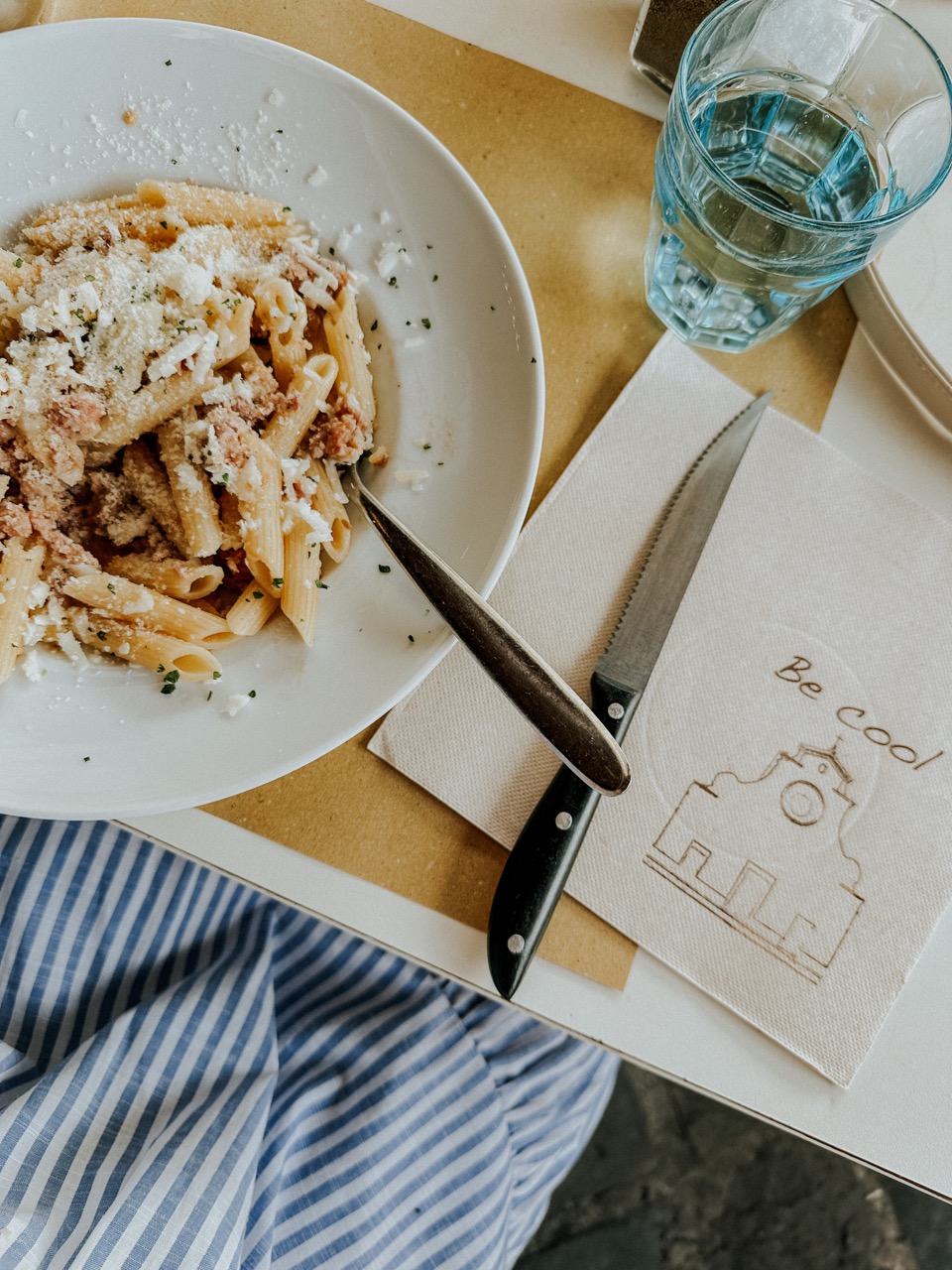
Intended to try the infamous Gustapizza — packed, long line, moved on. Gustaosteria nearby was the right call. Sat outside. Ordered the sausage penne. The sausage was the best eaten on the entire trip, full stop.
Pasta Making Class
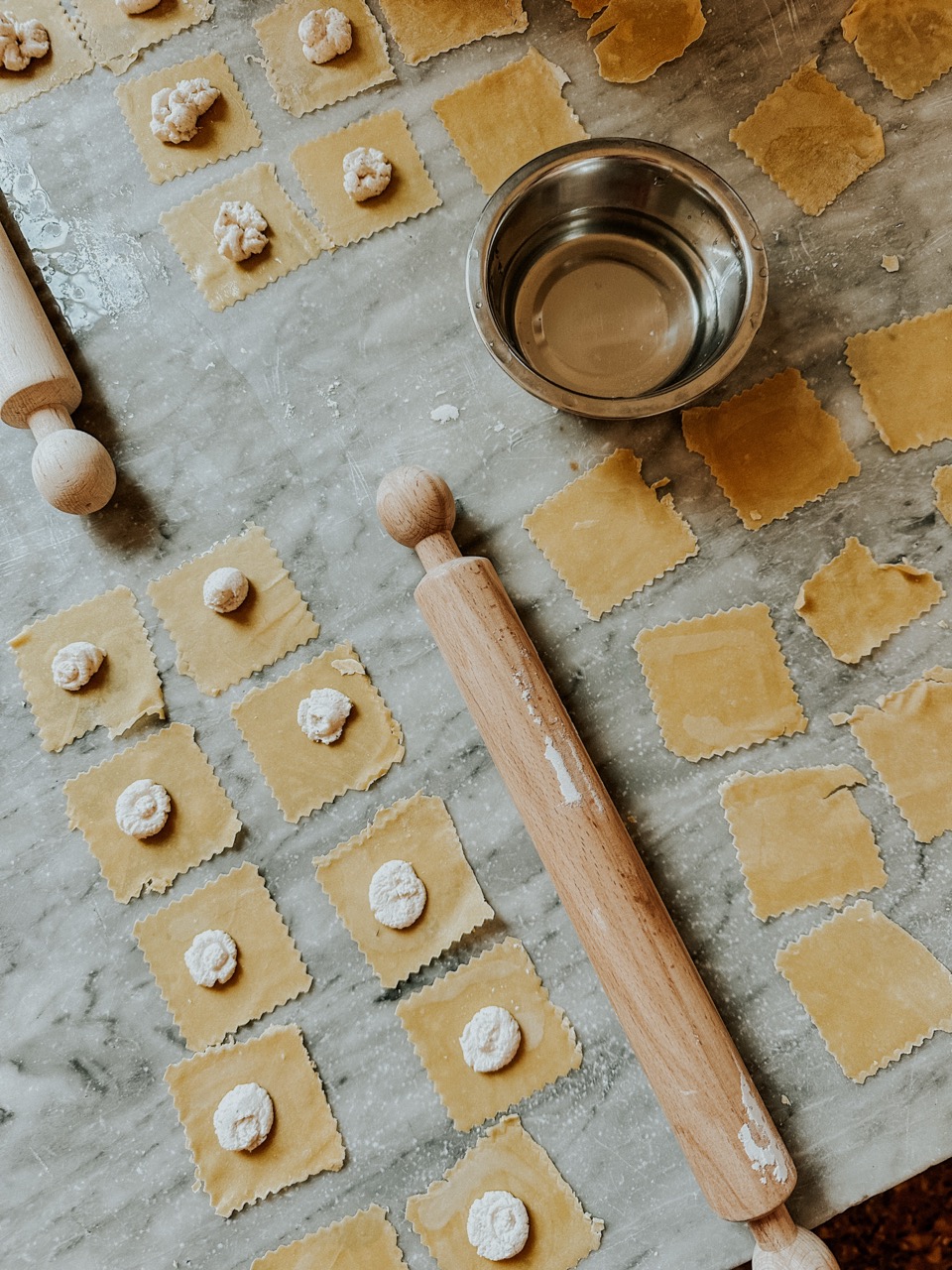
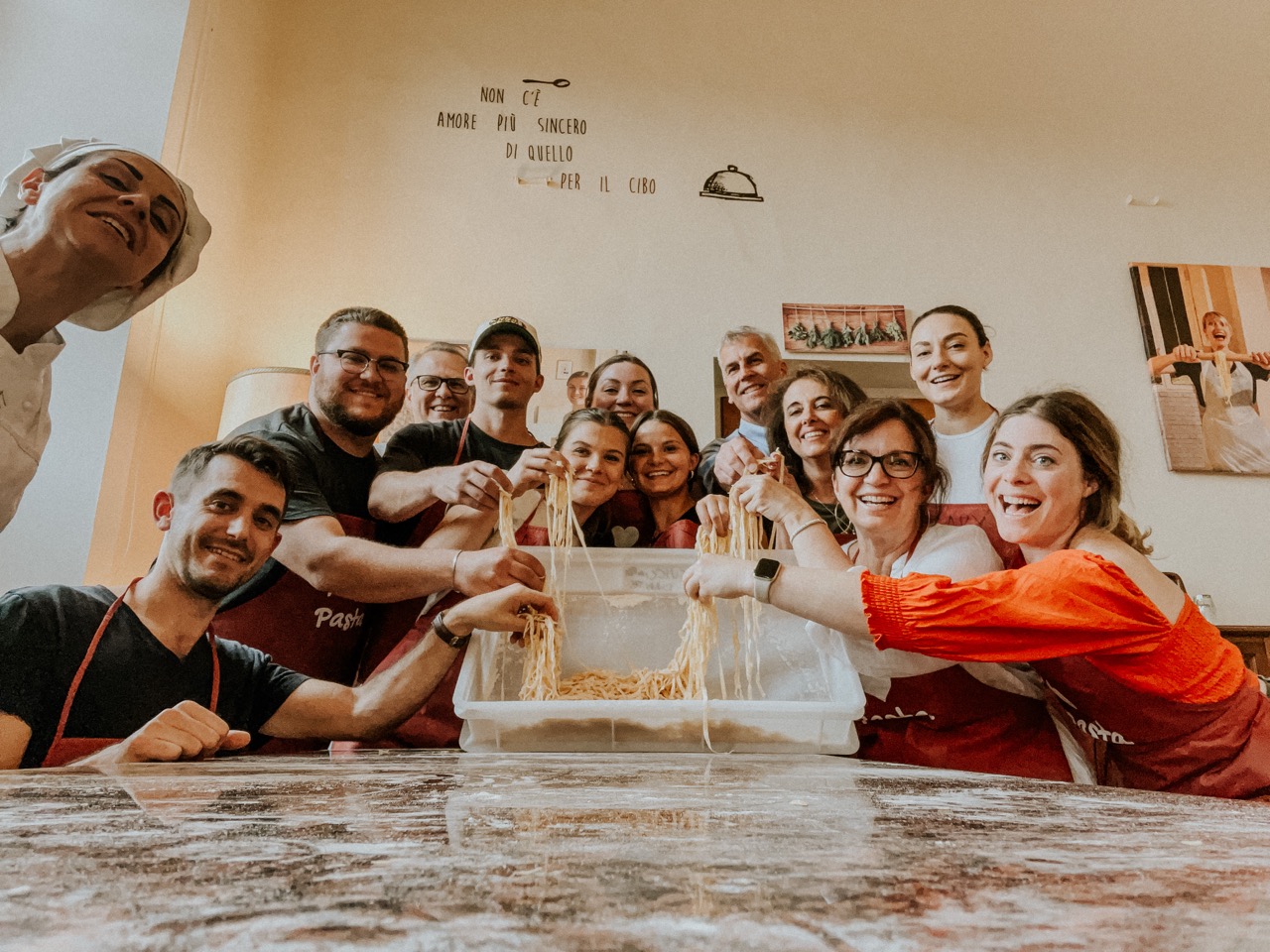
The activity anticipated most, and the one that delivered. The pasta making class was led by a chef who was equal parts skilled and hysterical, teaching techniques passed down through her family for decades. The group made tagliatelle, tortellini, and ravioli — all cooked in simple sauces and eaten immediately. Genuinely one of the highlights of the entire Italy trip.
Florence is one of the best cities in Italy for day excursions — Cinque Terre, Chianti, San Gimignano, Siena, Pisa, and Bologna are all accessible.
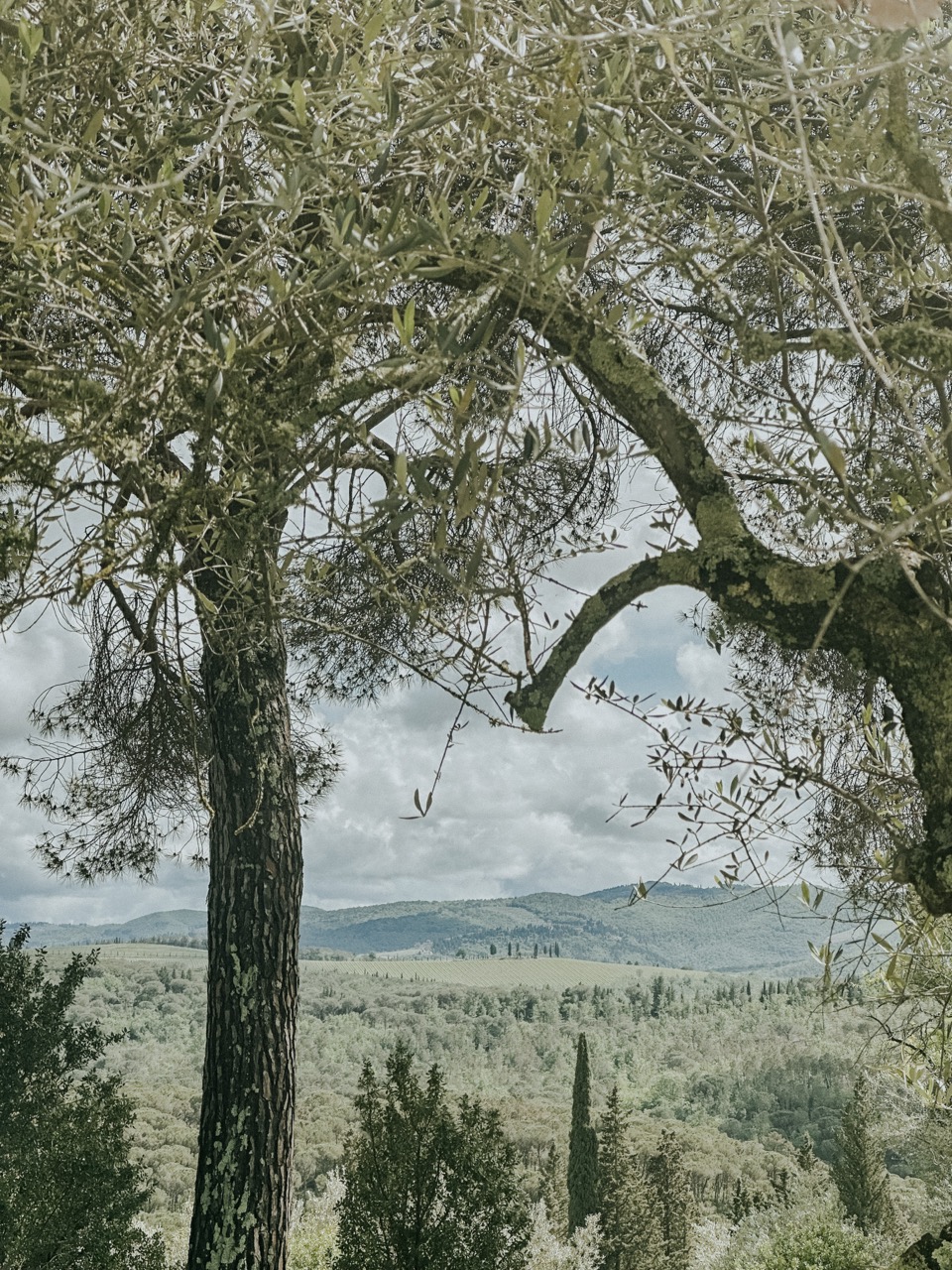
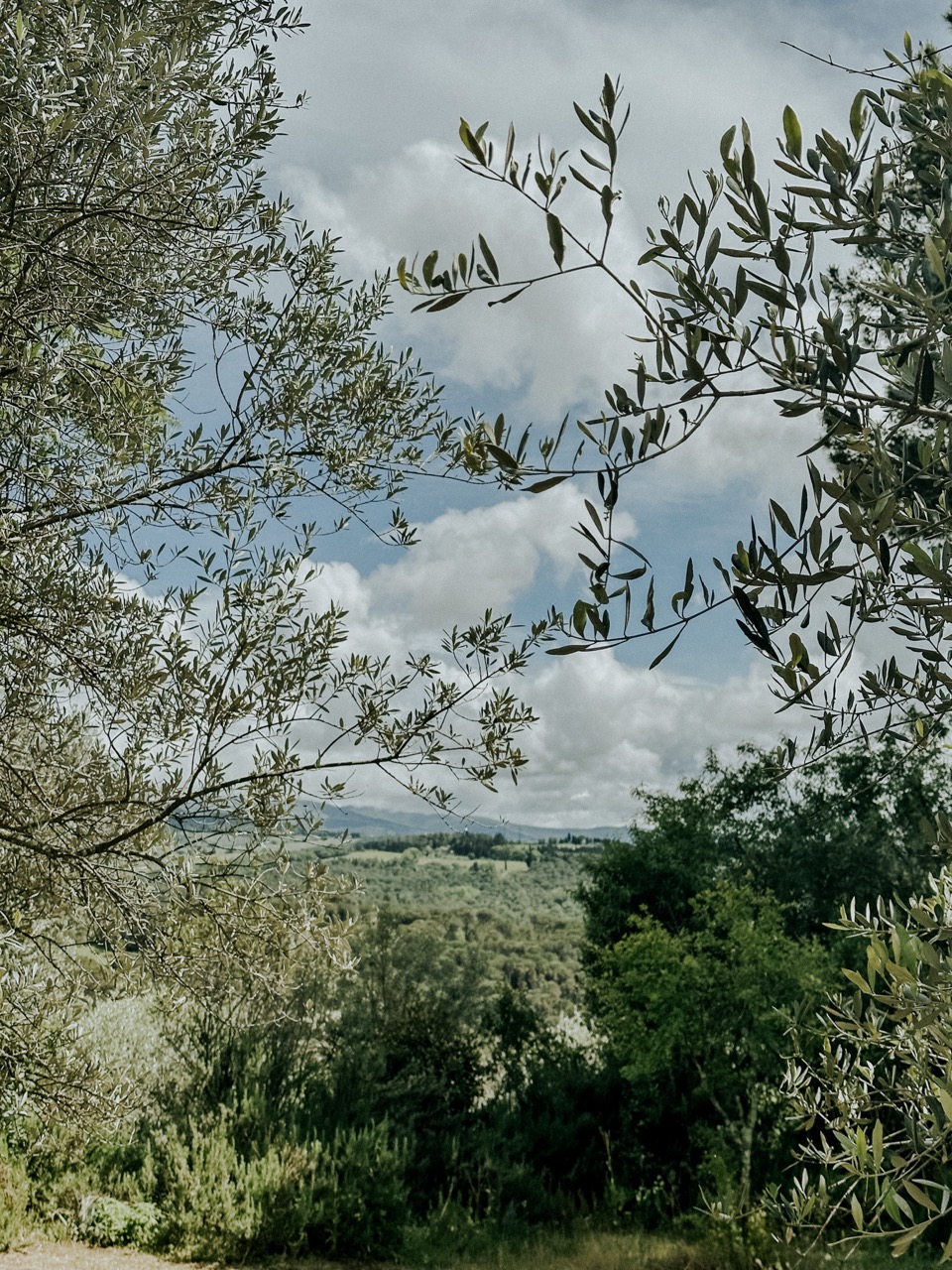
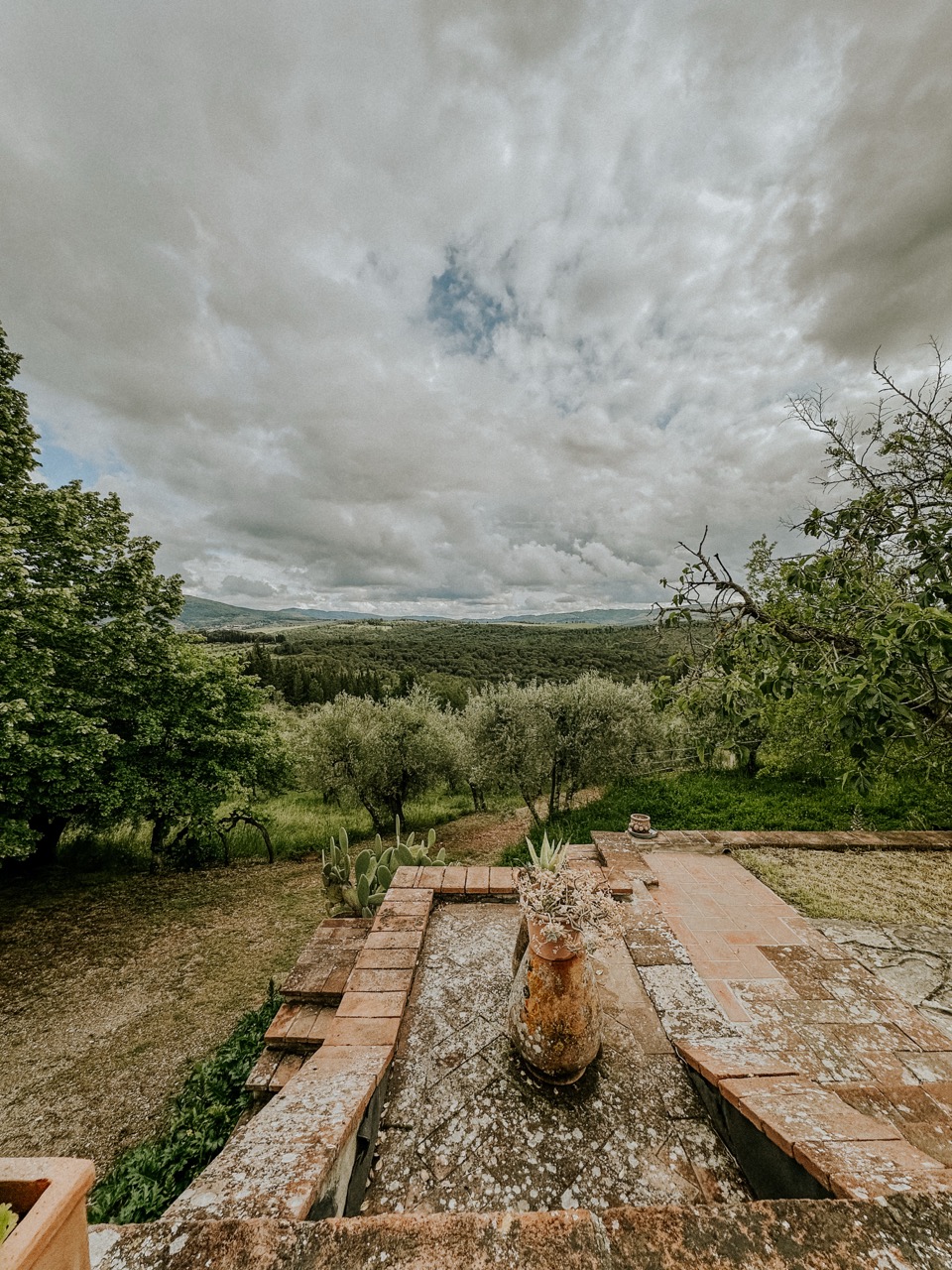
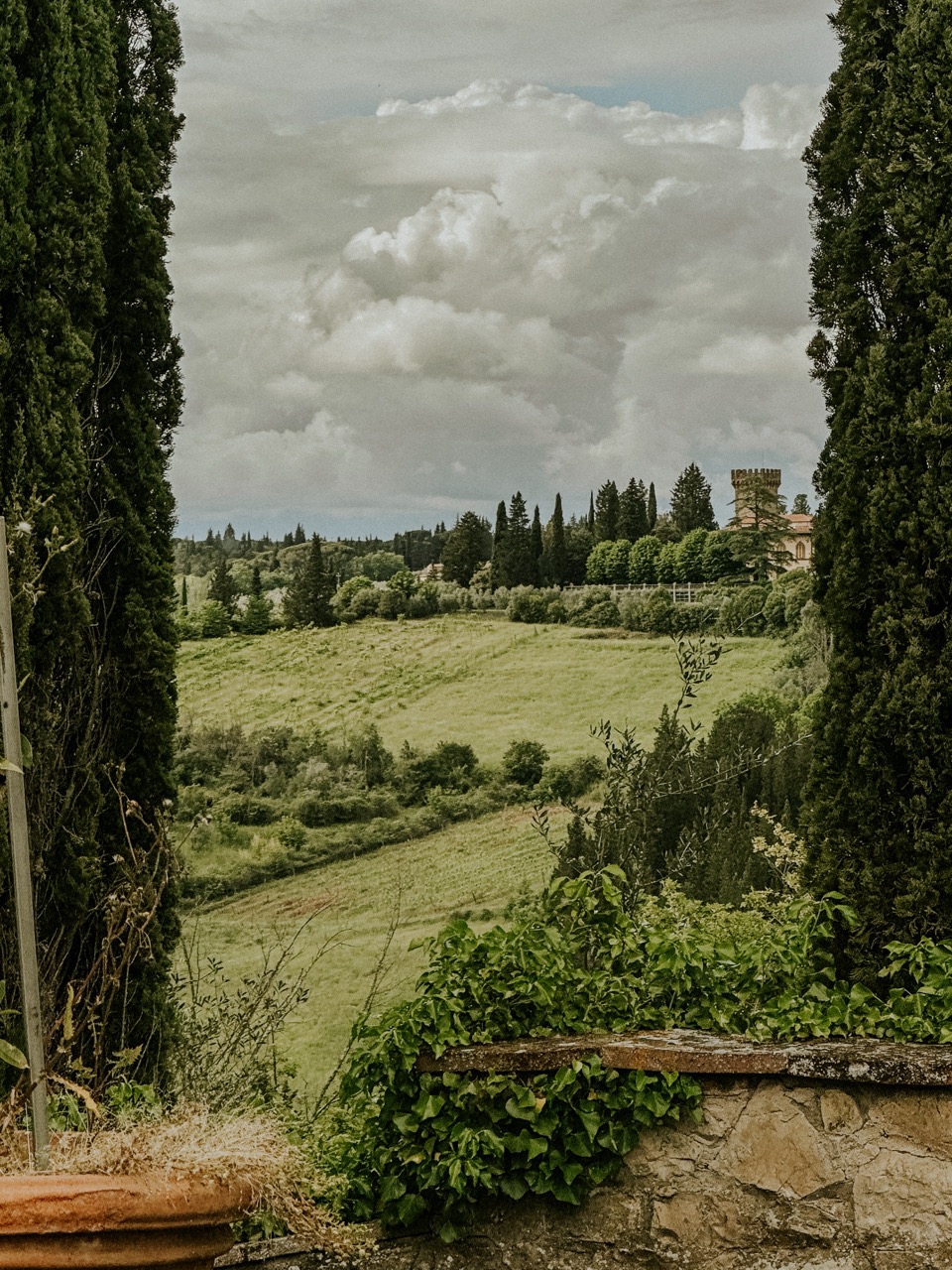
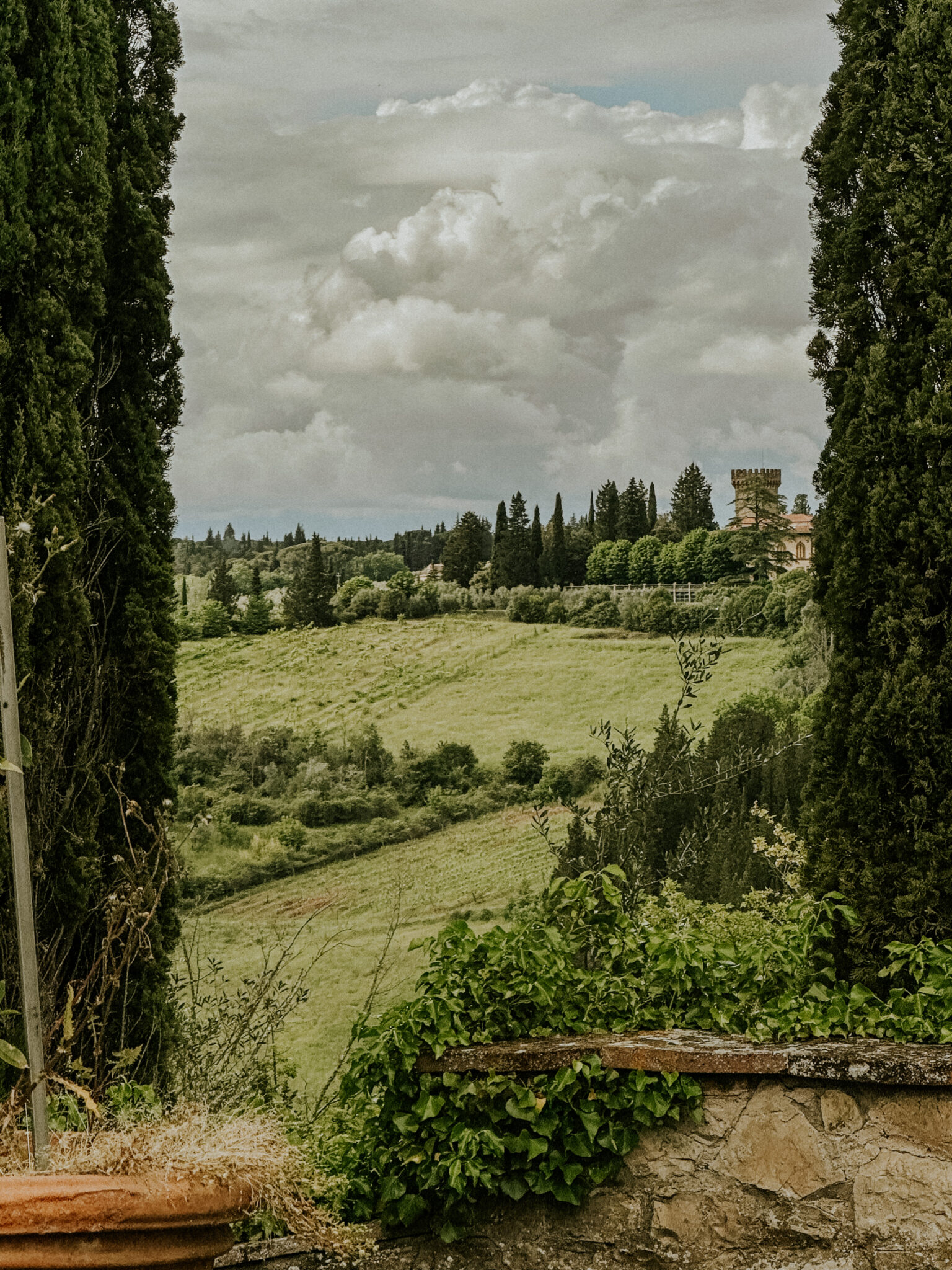
For this trip, the choice was Chianti, and specifically Torcibrencoli Vineyard — a small, family-run winery operated by a group of cousins.
The morning started with coffee at Ditta Artigianale — a more American-style coffee shop in atmosphere, with good food and a great place to sit and linger before heading out.
On getting to the vineyard: The Airbnb hosts outlined several options; the cheapest was the bus, which became the most stressful moment of the entire Italy trip. The ticket station and the bus stop were on opposite sides of the street from the train station — neither where they appeared to be on the map, and neither inside the station itself despite how they were described. Thirty minutes of running around in the rain, a bus boarded at the exact moment of departure, and a return ticket completely forgotten. Florence exit, chaotic.
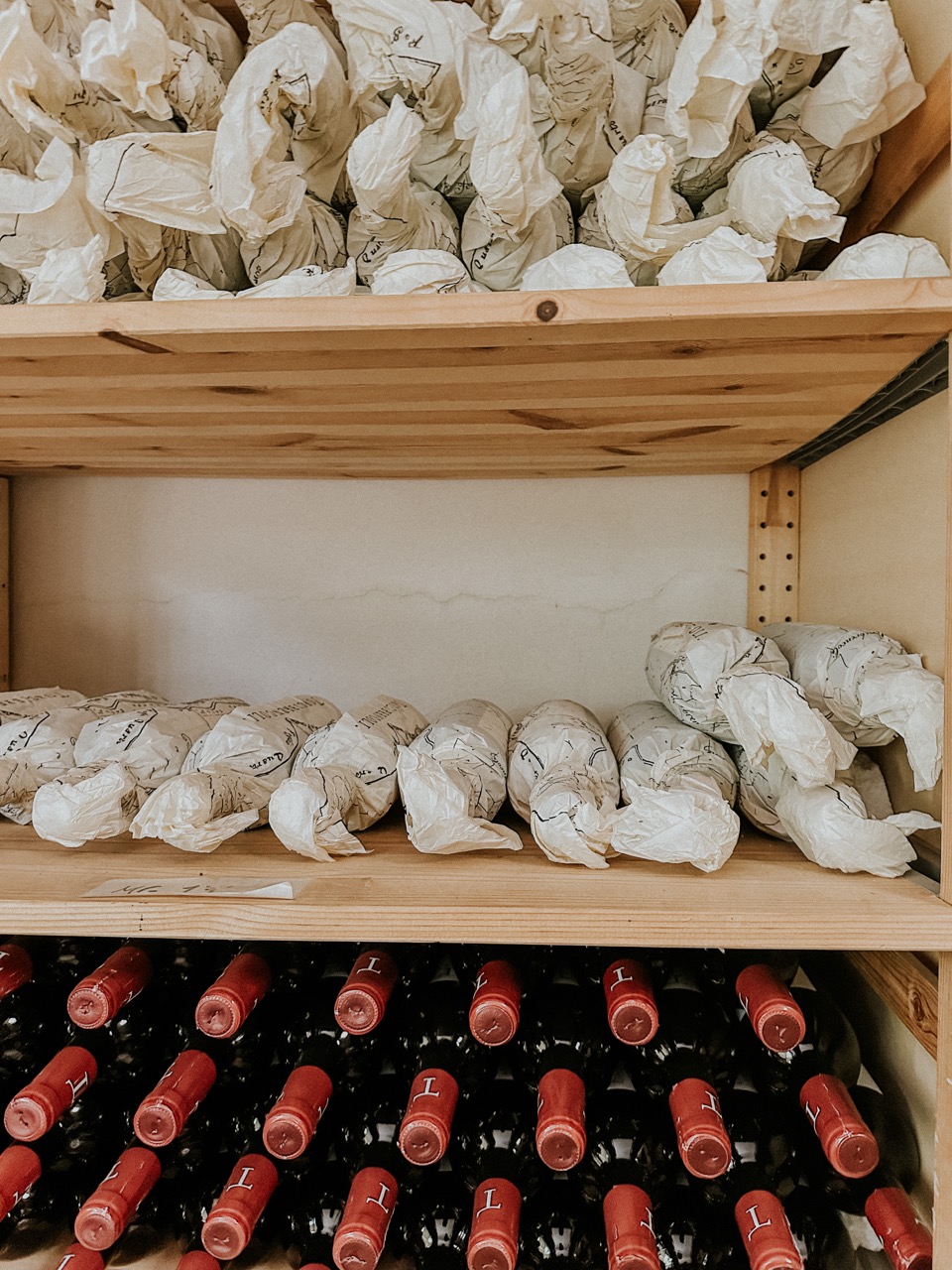
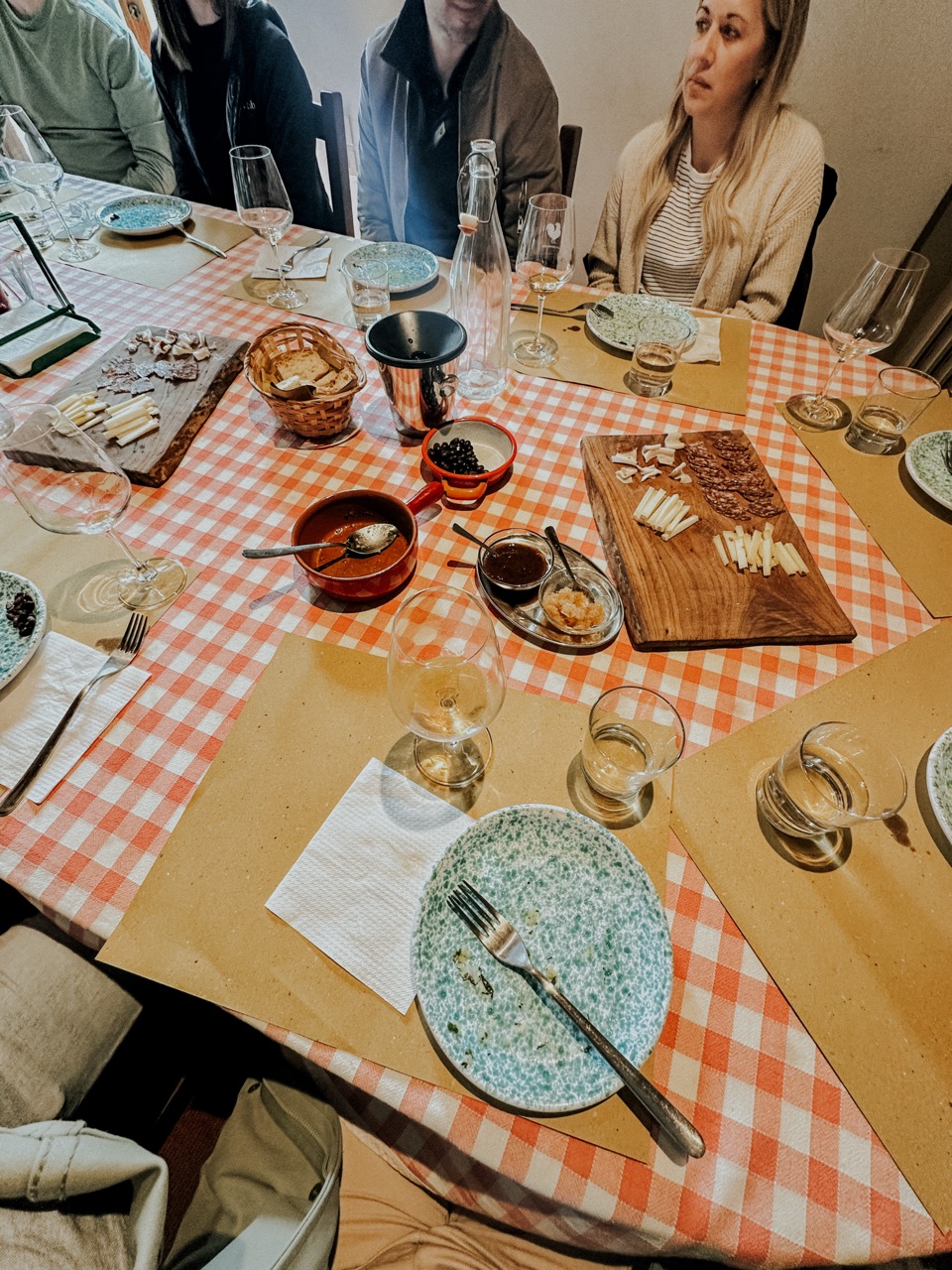
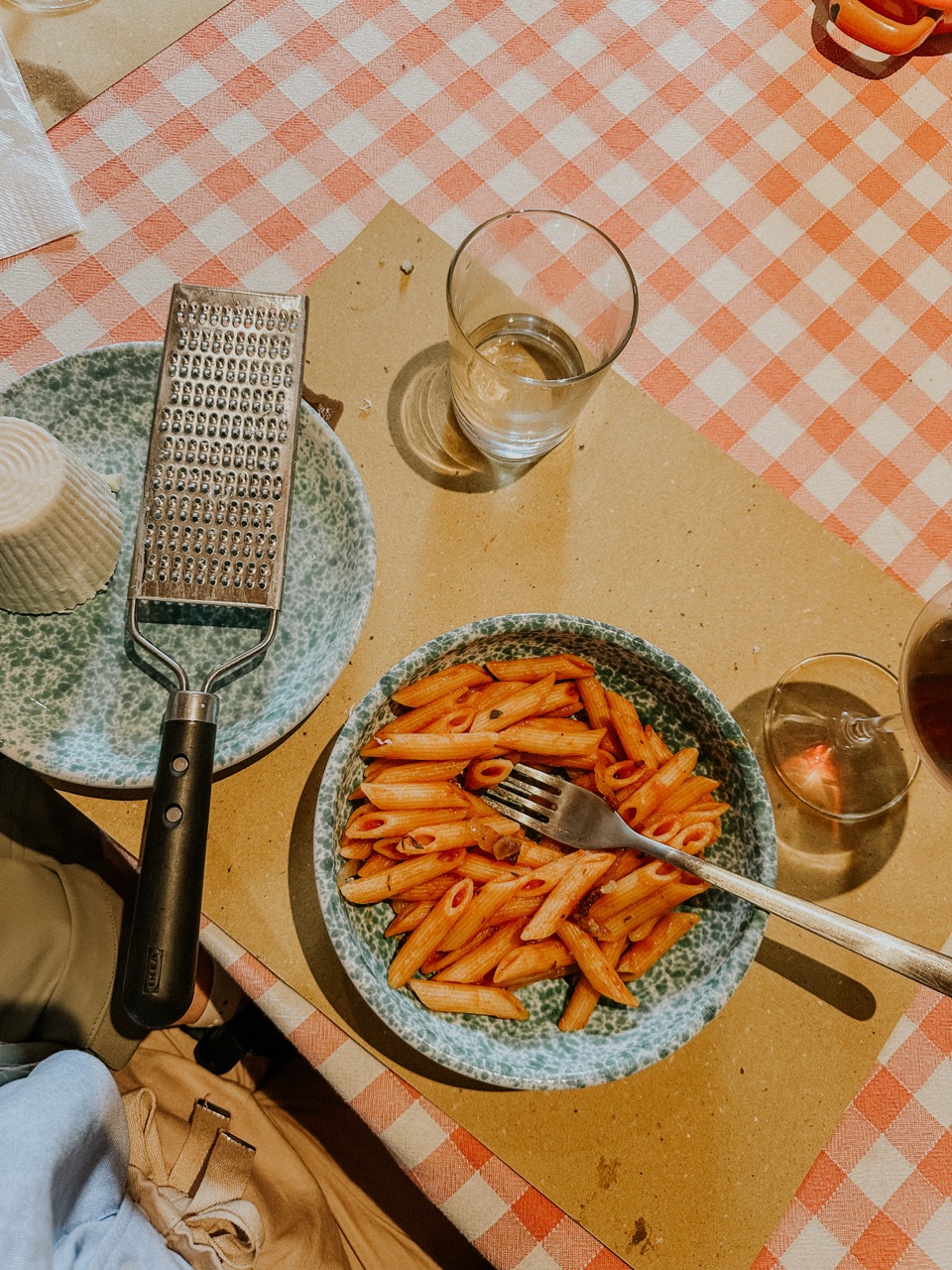
The vineyard itself: completely worth it. A cellar tour, a labeling room walkthrough, a genuinely engaging education on winemaking techniques and wine varieties, and a meal of local cheeses, salami, and housemade penne with ragu that was outstanding. Funny, personable hosts who clearly love what they do. The return to the city came courtesy of a newlywed couple who offered a ride back — which solved the forgotten return ticket problem beautifully.